Natura Mountain Retreat
Costa Rica
Residential

Master Plan Completed 2007
800 acres
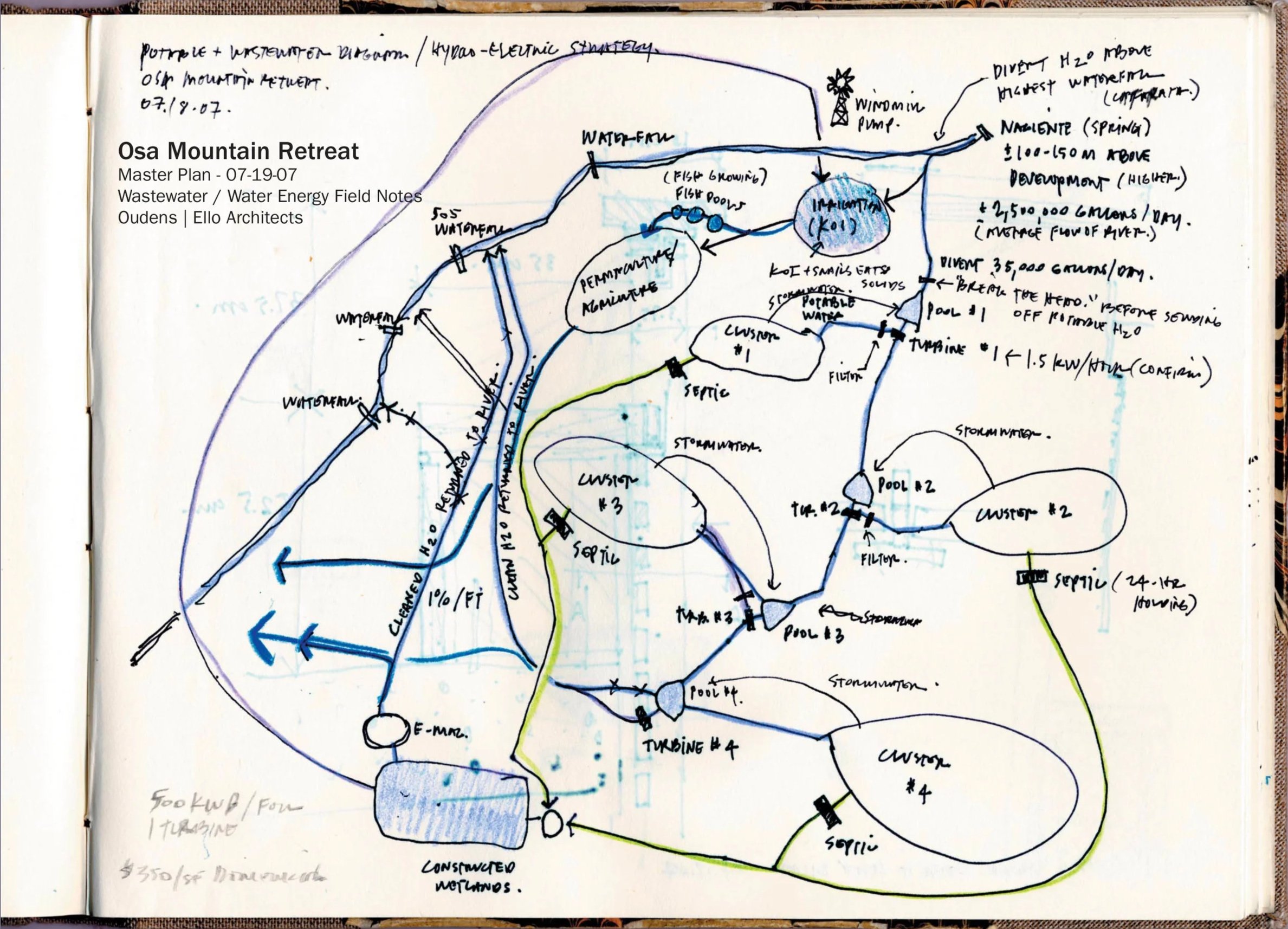
Conceptual diagram of fresh and waste water network

In situ engineering work session, April 2008
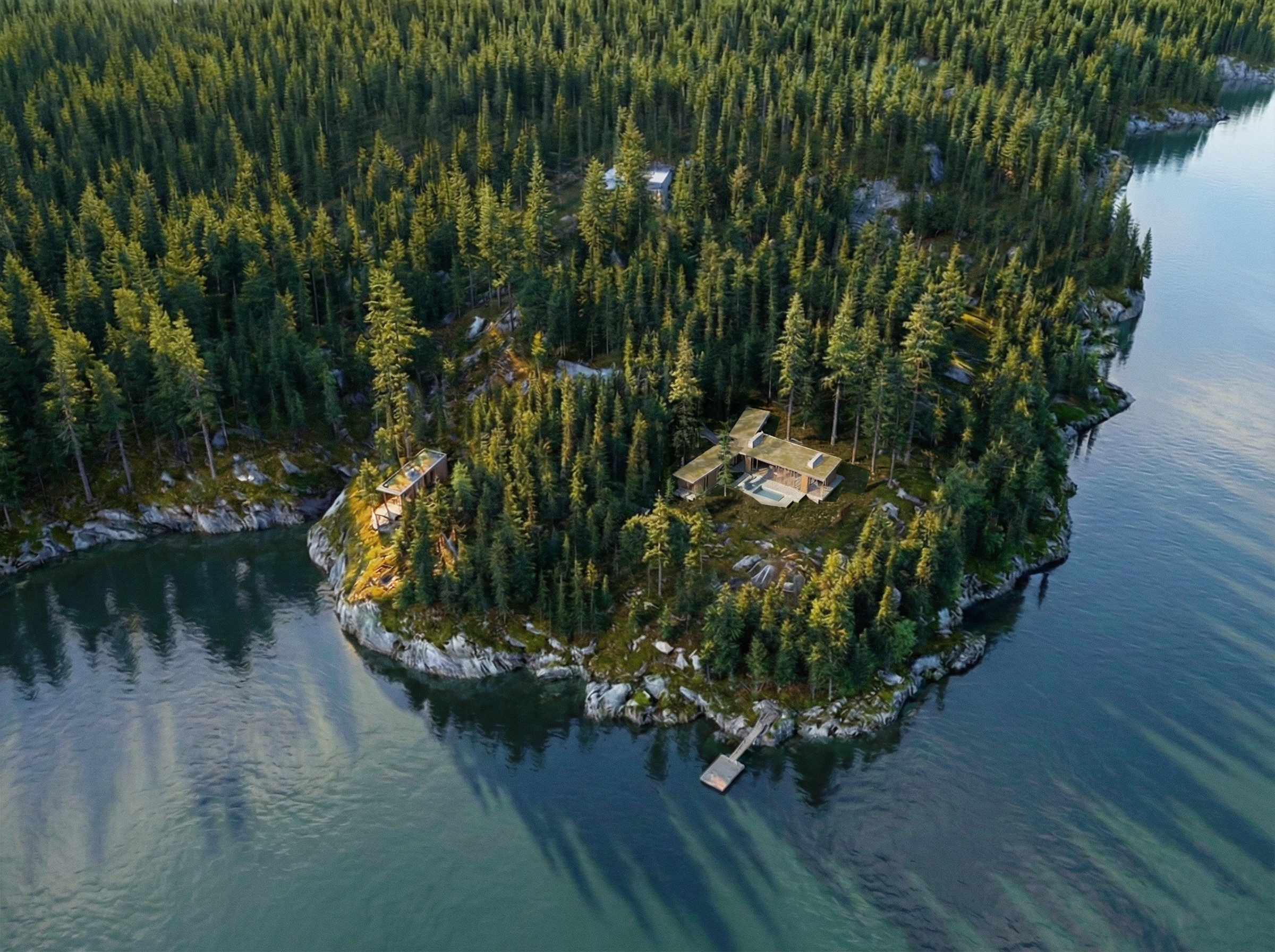
In early 2007, Oudens Ello Architecture (OEA) was selected to provide master planning and design consulting services for an 800-acre eco-tourism resort located along Costa Rica’s southwestern Pacific coast. Working in partnership with Natura 51, a green development enterprise based in New York City and Uvita, Costa Rica, OEA developed a comprehensive net-zero energy sustainability framework for the proposed 165-unit resort. The planning strategy was organized around the site’s two most significant natural assets: water and topography.
From the outset of the six-month study, the design team established a guiding principle to confine development exclusively to areas previously disturbed by historic cattle ranching and cacao plantation activities. This approach preserved approximately 95 percent of the site as intact primary rainforest, reinforcing the project’s commitment to environmental stewardship and long-term ecological health.
The proposed development further responds to the site’s dramatic landscape through a sensitive integration of architecture, infrastructure, and natural systems. Buildings, circulation networks, and development clusters are carefully sited to protect existing streams and waterfalls while maintaining key view corridors and minimizing ecological disruption. The site’s hydrology plays a central role in both resource management and energy generation, providing all potable and recreational water for the resort and contributing to its renewable energy strategy alongside a photovoltaic solar array. Approximately two percent of the primary stream’s flow is diverted at a high elevation and conveyed through a system of aqueducts to collection pools and hydroelectric micro-turbines distributed throughout the site.
Wastewater infrastructure similarly capitalizes on the site’s favorable topography, allowing gravity-fed conveyance to constructed wetlands located at the lower reaches of the property. There, wastewater is treated through “living machine” systems—intensive bioremediation environments that employ bacteria, algae, protozoa, plankton, snails, and other organisms to break down solids and cleanse the water. Following treatment, the water is returned to its source at a significantly higher level of purity than when initially extracted.
An additional social dimension of the project’s holistic sustainability strategy is embodied in the provision of housing and amenities for resort employees. Rather than treating worker housing as ancillary infrastructure, the plan envisions it as a vibrant local community that enhances the resort through authentic civic spaces and programming. By reimagining this relationship, the project fosters a mutually beneficial coexistence in which visitors and local residents alike share in sustained economic, social, and cultural exchange.