Cahoon Museum of American Art
Cotuit, MA
cultural
Ongoing
24,000 square feet
Historic Renovation | New Construction
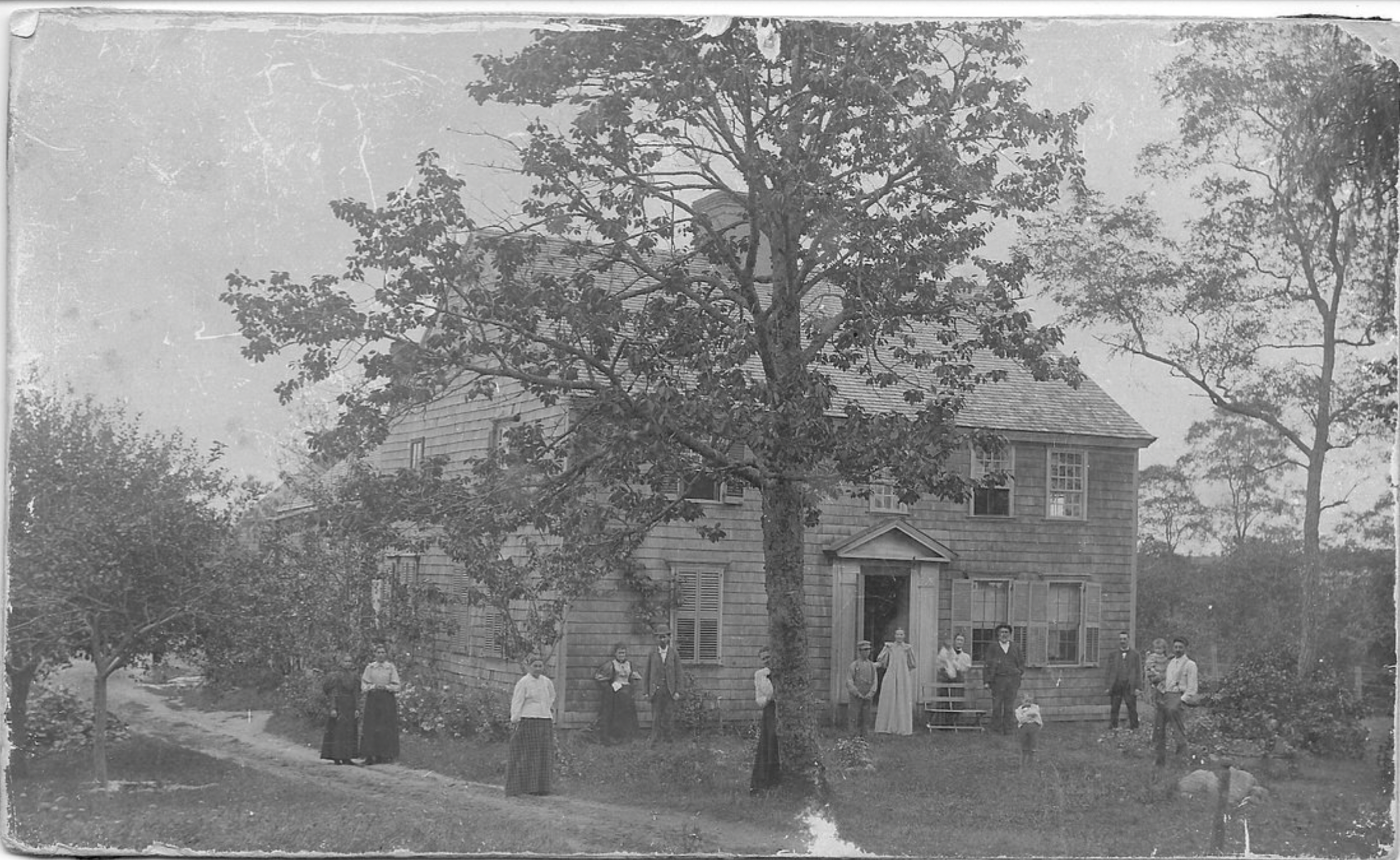
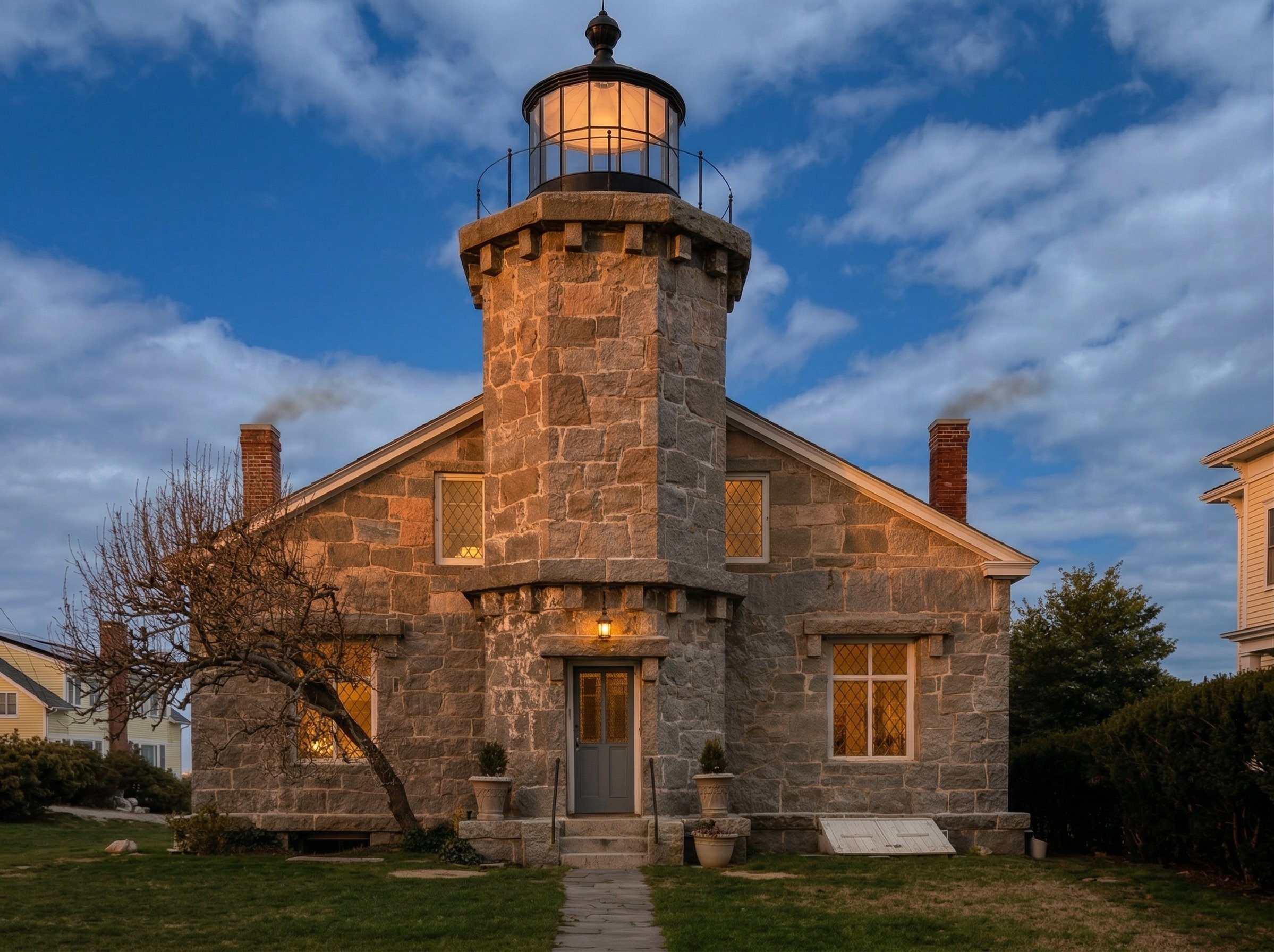
The Cahoon Museum of American Art, located in the seaside village of Cotuit, Massachusetts, celebrates American art from the 18th century to the present, with a mission centered on education and enjoyment of art, with an emphasis on contemporary artists connected to New England’s heritage and the broader narrative of American art. The museum is housed in the historic 1782 Crocker House—one of six Crocker homes along Cotuit’s former stage road—and the former home and studio of Cape Cod folk artists Ralph and Martha Cahoon.
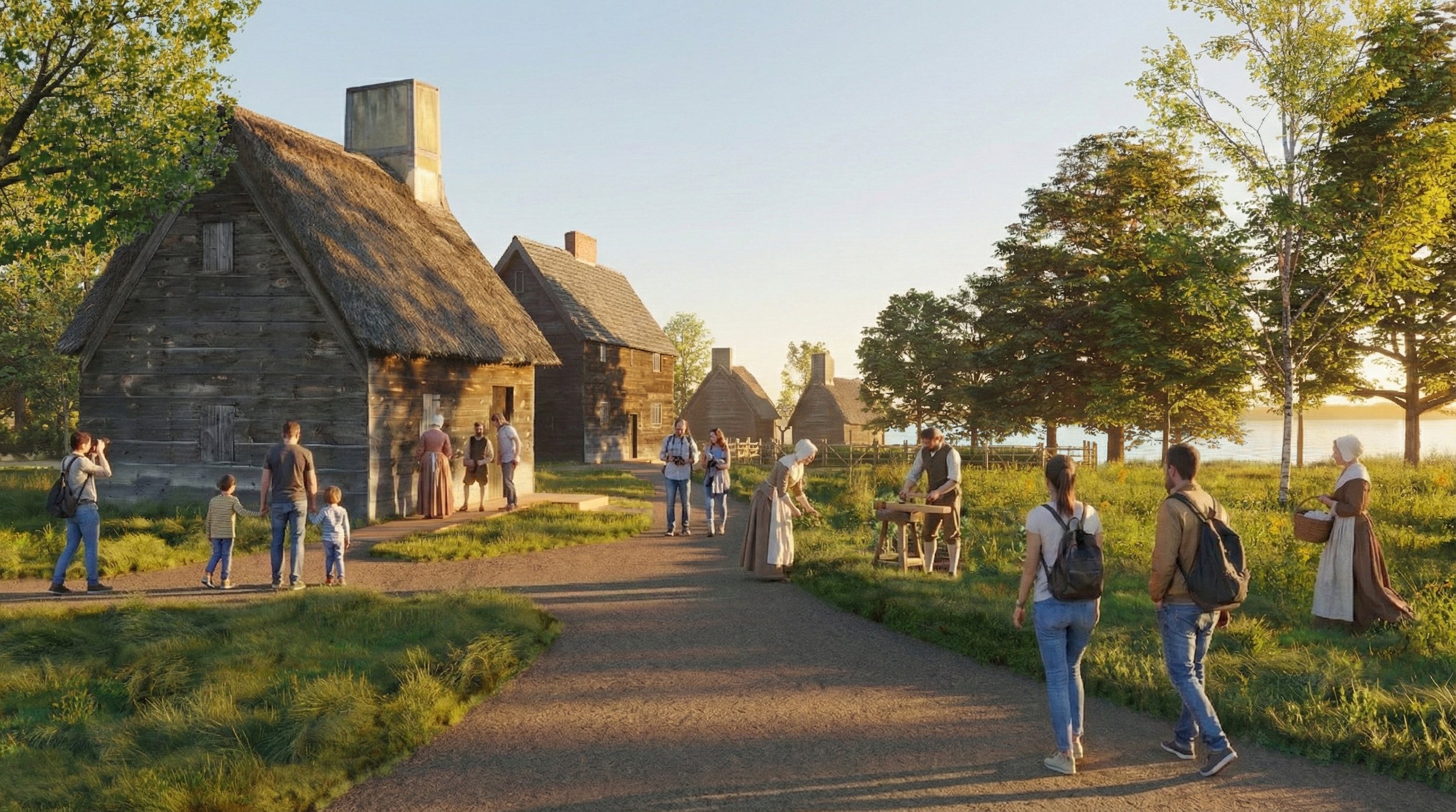
Following the acquisition of a neighboring two-acre property and the 1739 Ebenezer Crocker House, and guided by a master plan for future growth, the museum engaged Oudens Ello Architecture (OEA) to conduct a conceptual design and feasibility study for a museum expansion. The project seeks to integrate the historic buildings and landscape into a cohesive, multi-use campus while addressing critical space needs for expanded exhibitions, educational and public programs, events, and essential back-of-house functions, including collections storage and exhibit preparation. An additional objective is to clarify the arrival sequence and improve internal circulation.
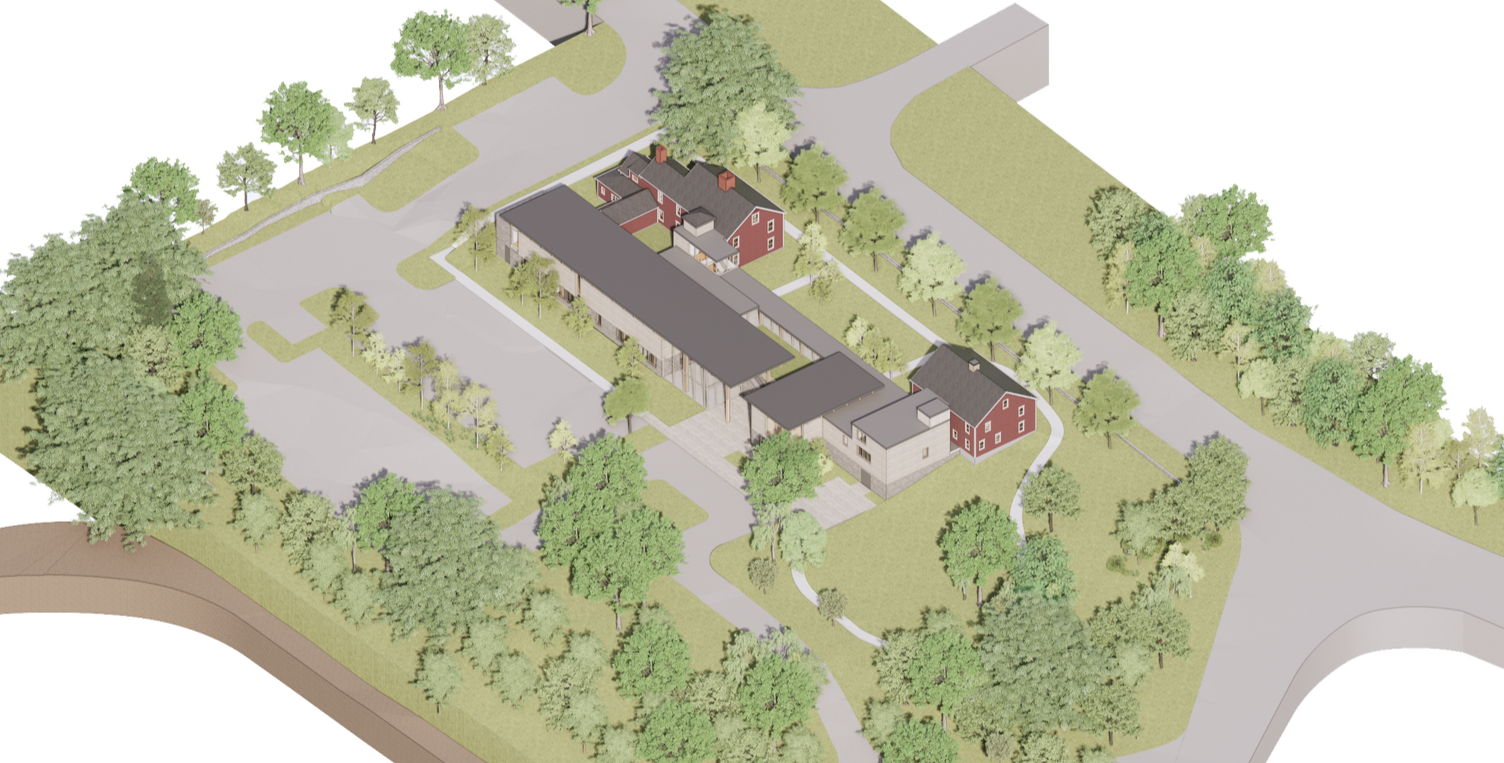
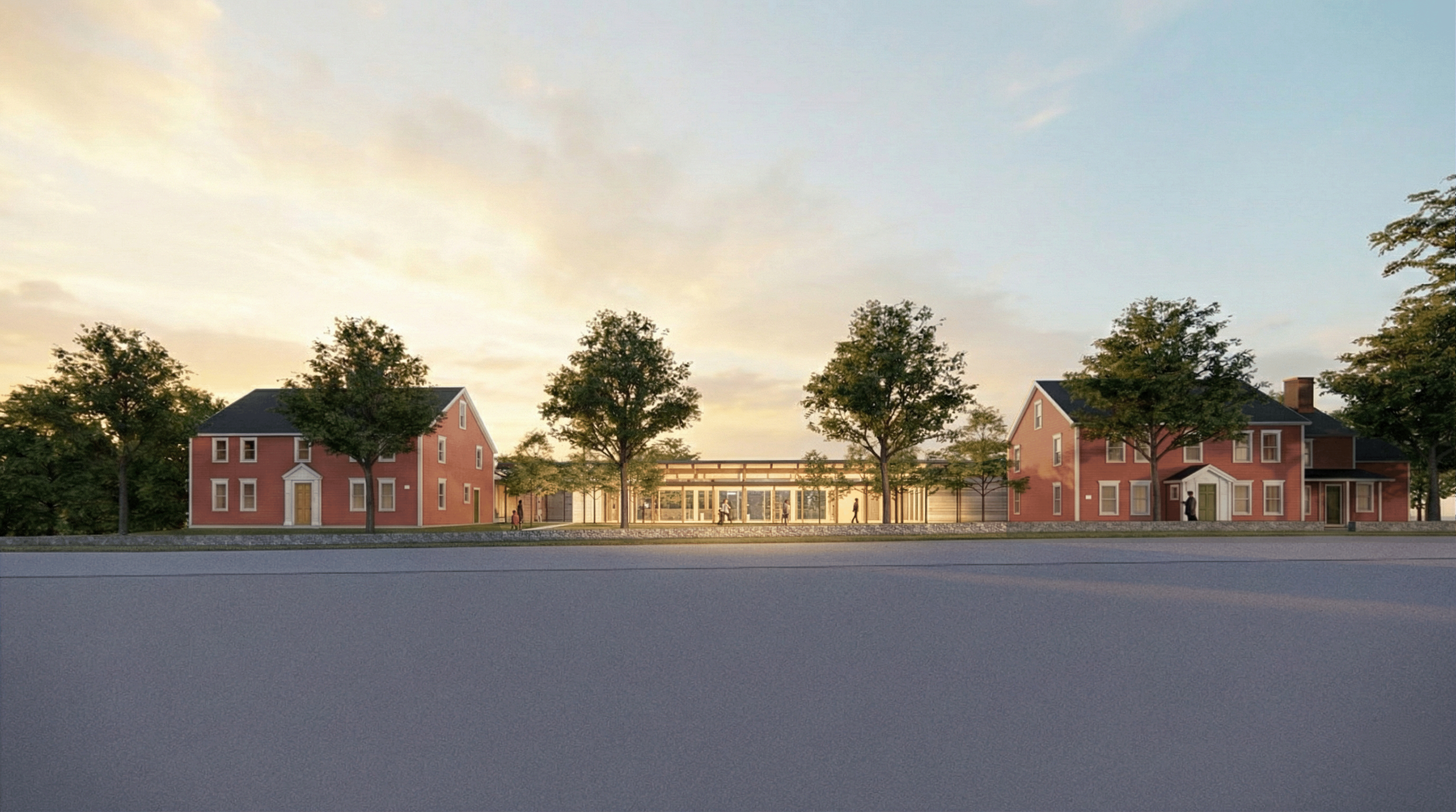
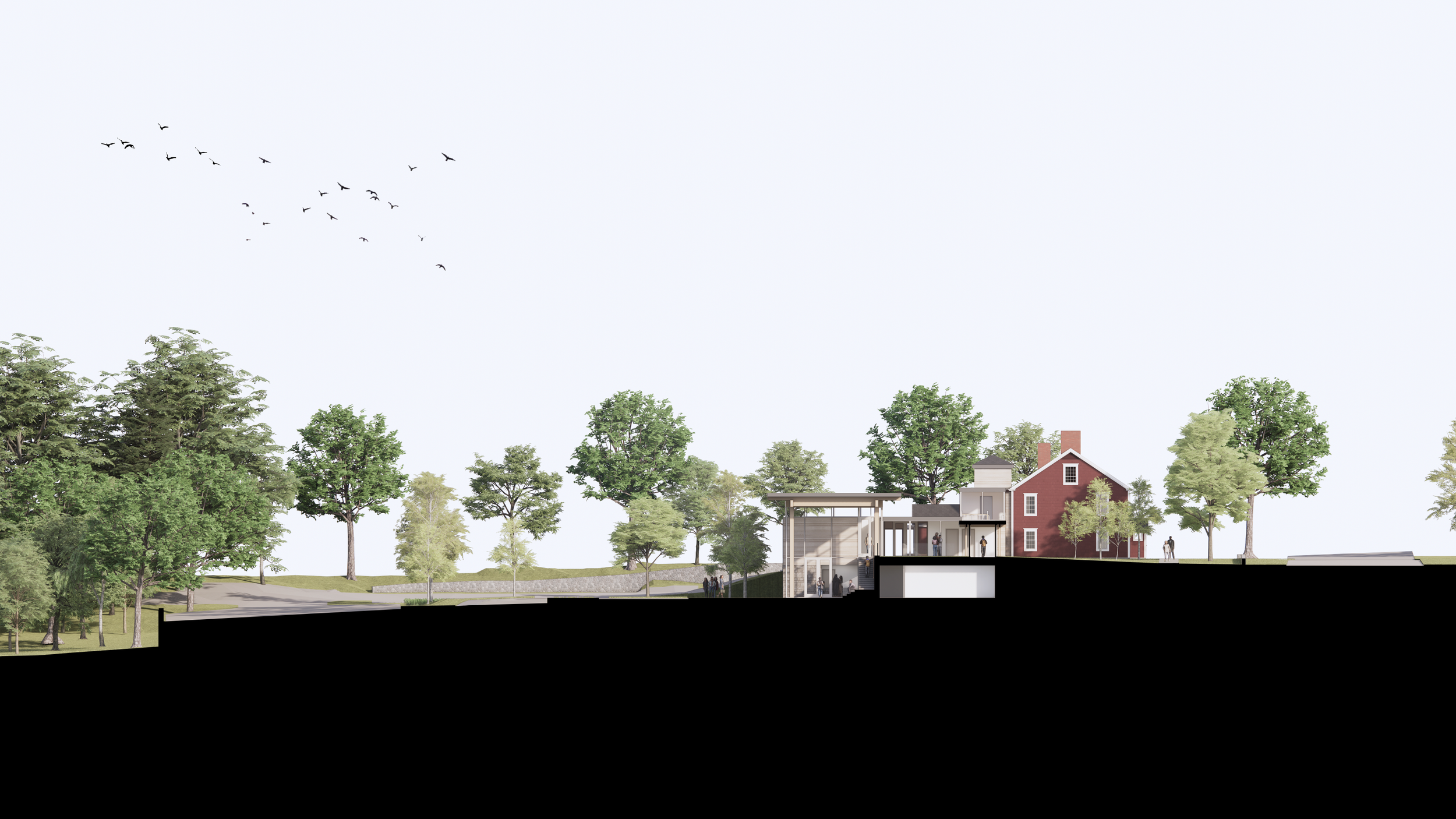
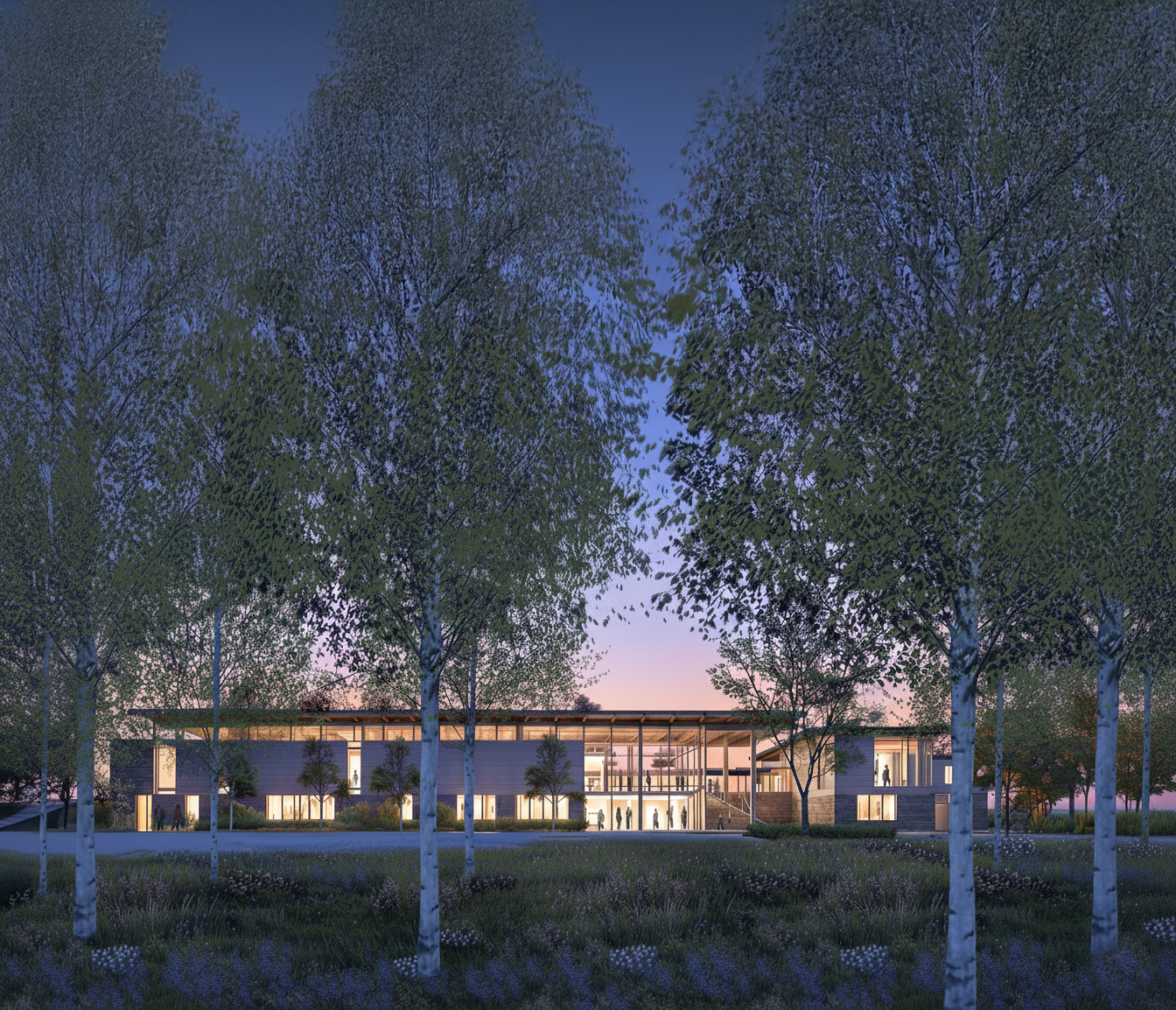
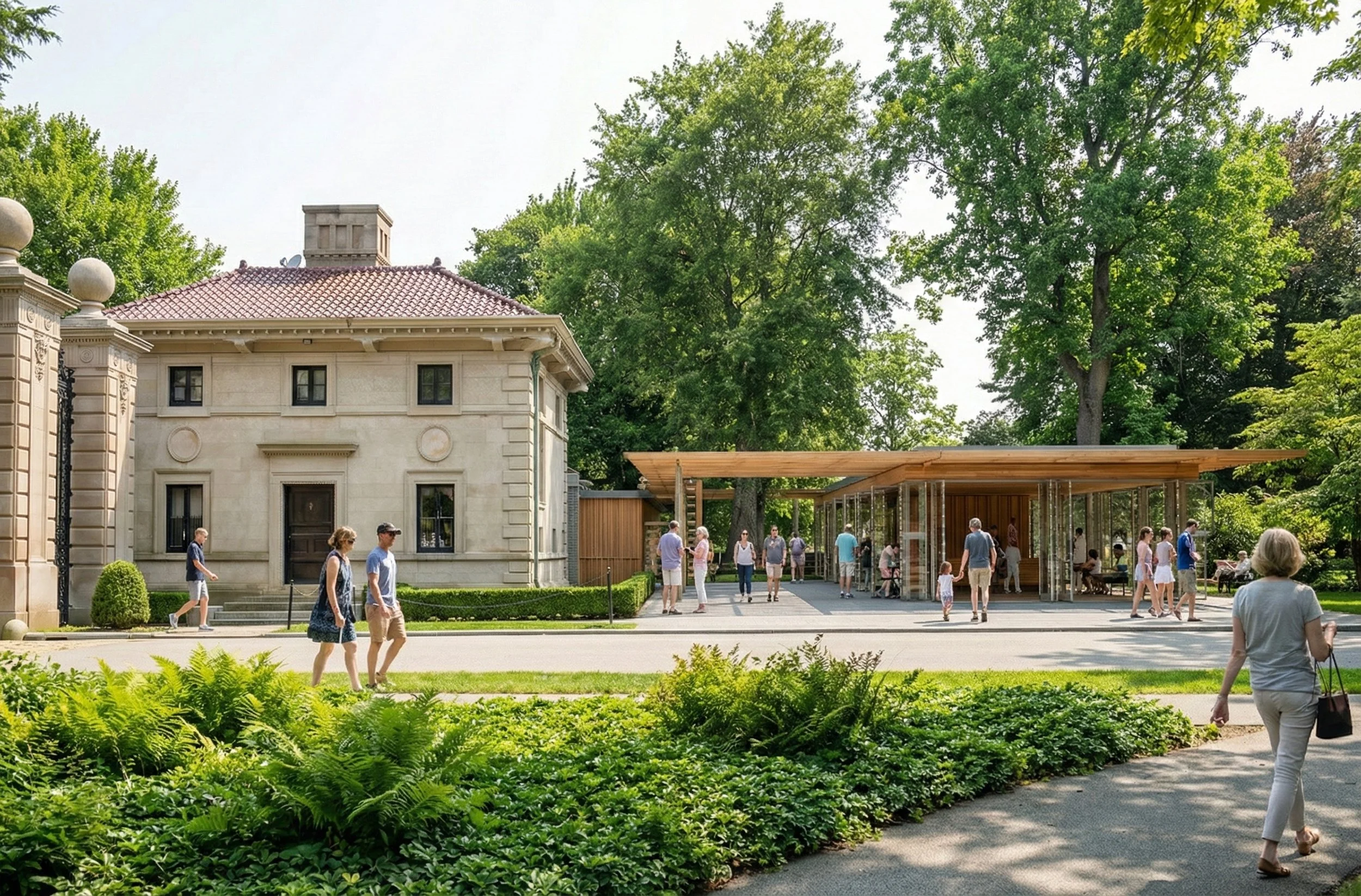
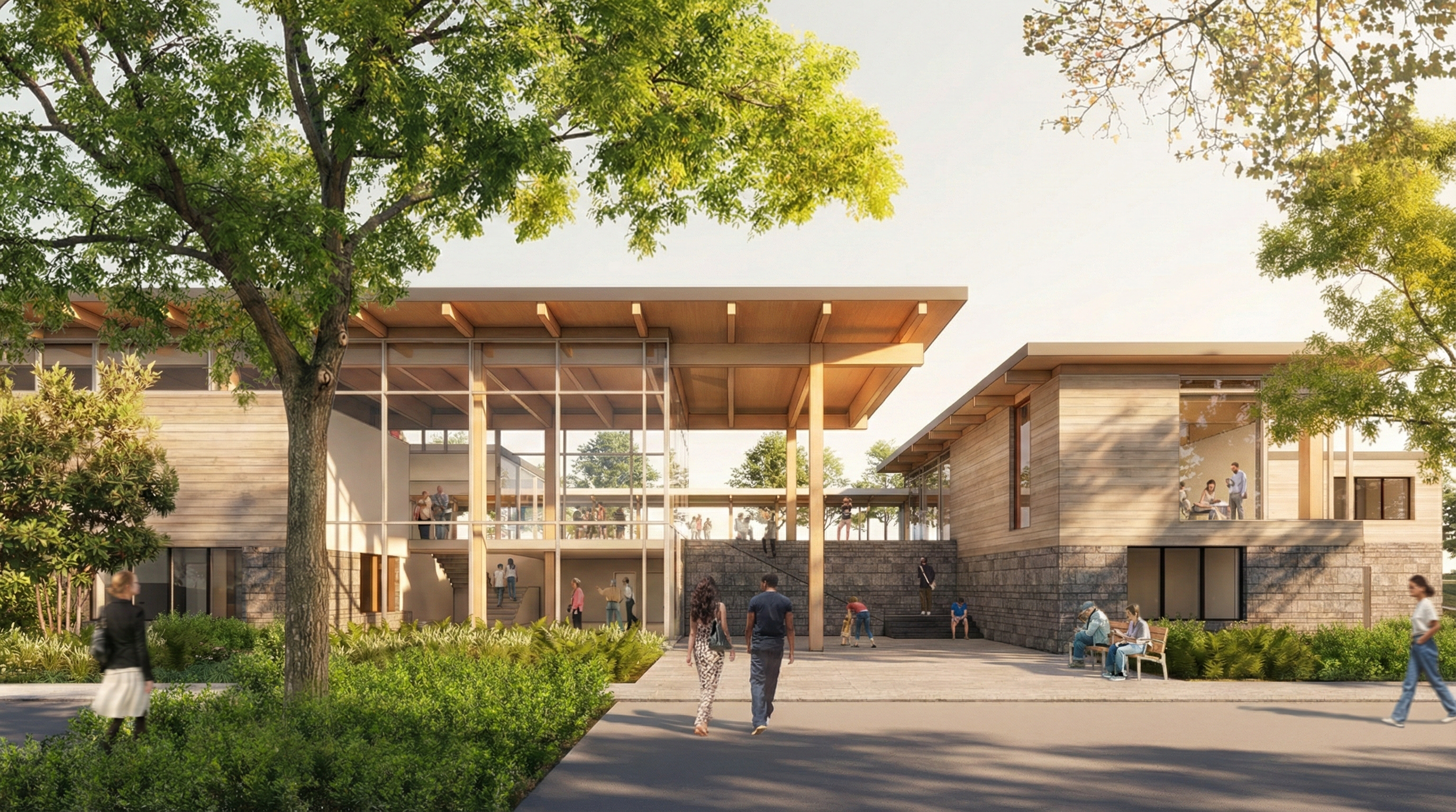
The proposed design preserves the legibility of the historic Crocker houses while reimagining the visitor experience and strengthening connections to the surrounding landscape. Relocating the Ebenezer Crocker House from its constrained roadside location enables a more coherent campus composition. The site’s sloping topography supports a sensitive design approach, allowing a two-story addition to appear as a single-story element from the street, linking the two historic buildings with a low, transparent connector.
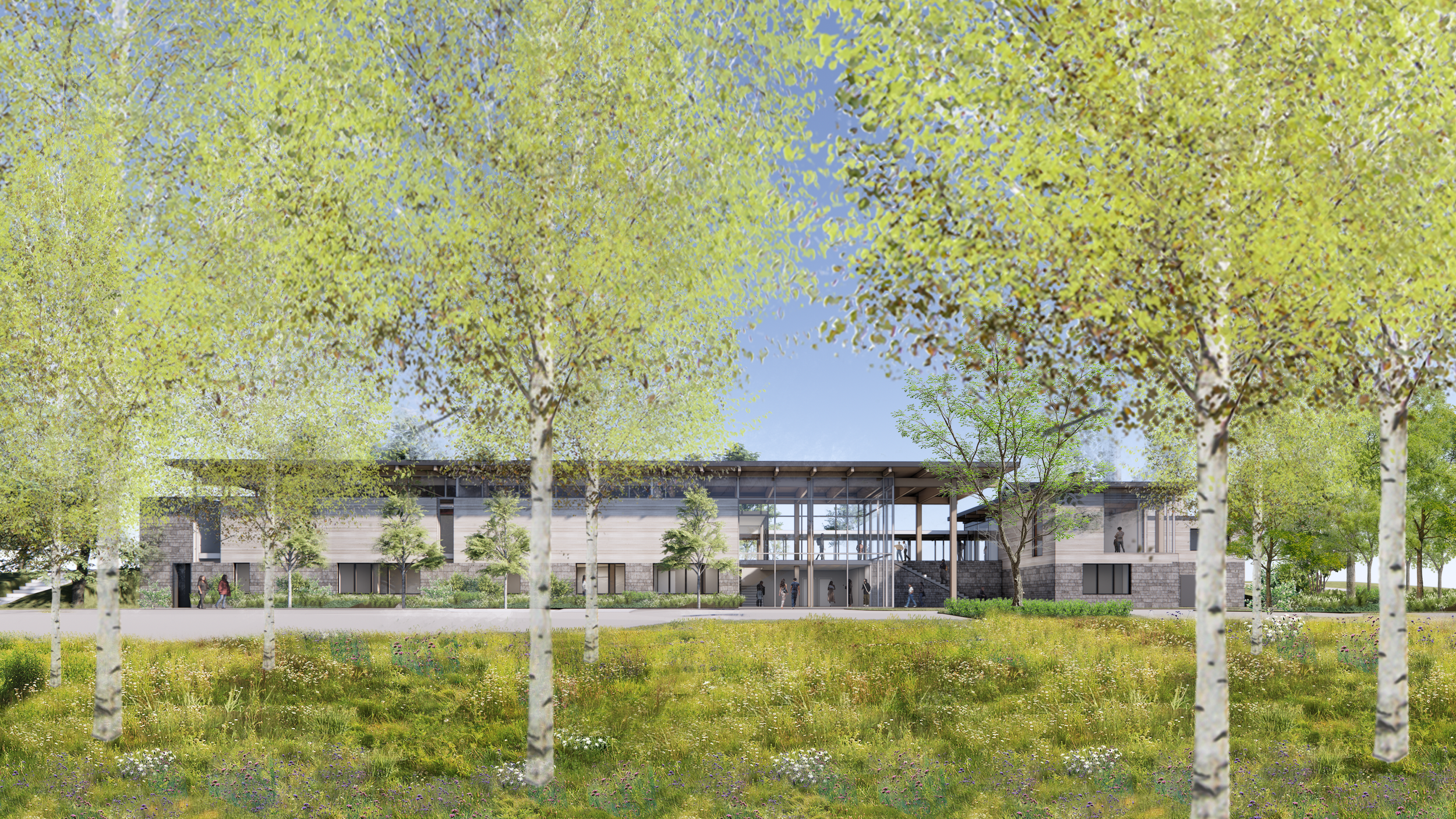
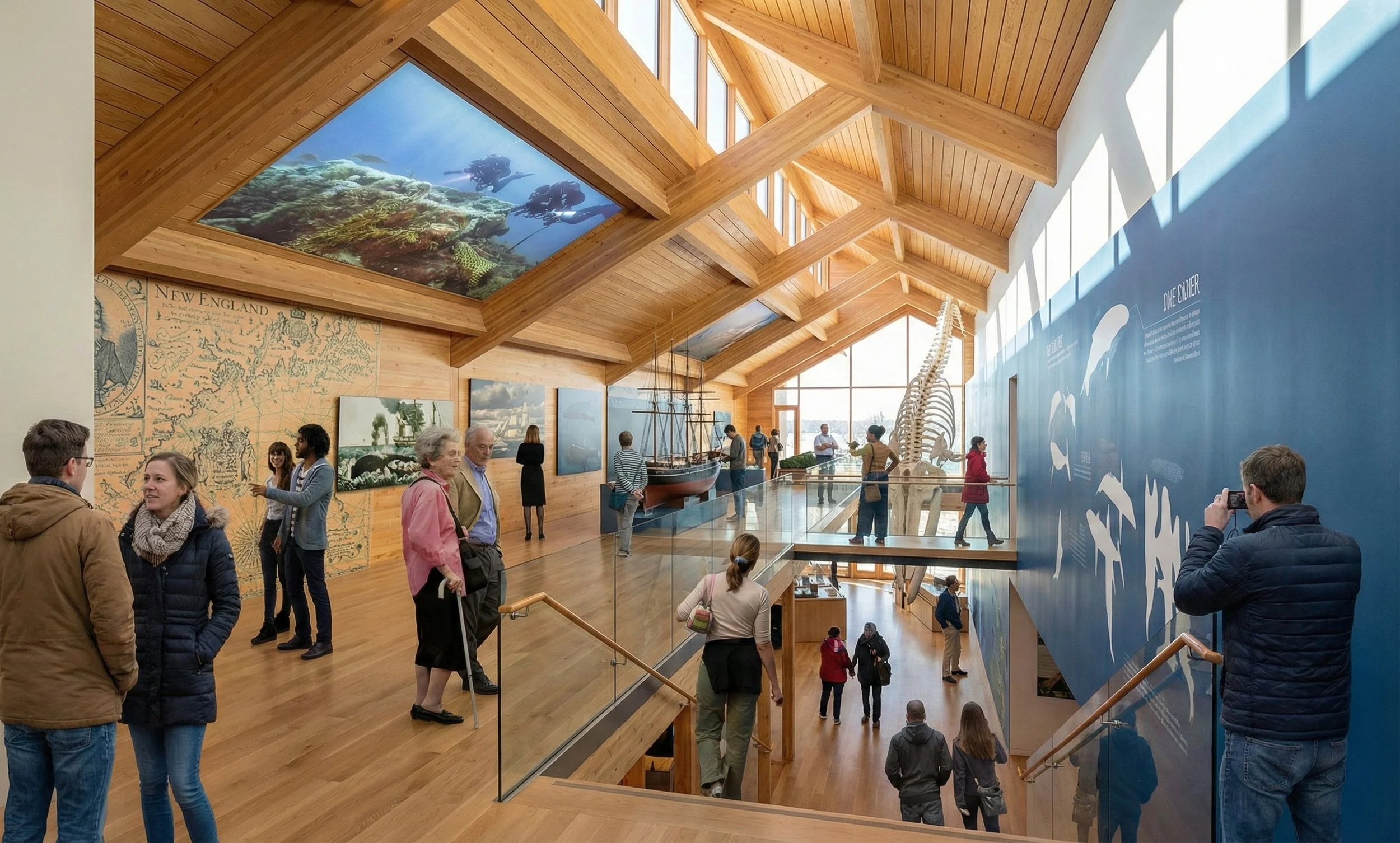
In deference to the two historic buildings, the new linear addition is visually light and intentionally dematerialized, with a glass connector, a central courtyard, and a covered entry porch oriented toward the lower-level parking area behind the museum. Expanded galleries are located on one side of the courtyard, with public program spaces on the other. A new, fully accessible public entrance at the rear of the building brings visitors directly into a generous double-height lobby with clear visual connections to the upper level, accessed by a new open stair. Visitor amenities—including information and ticketing, a museum store, and expanded public restrooms—are consolidated at this level.
The lower level significantly expands collections storage, curatorial spaces, and staff work areas, while the upper level—at grade with and visible from the street—houses expanded galleries and new flexible program spaces. The feasibility study was completed in 2025, and the museum is currently planning the first phase of project implementation.
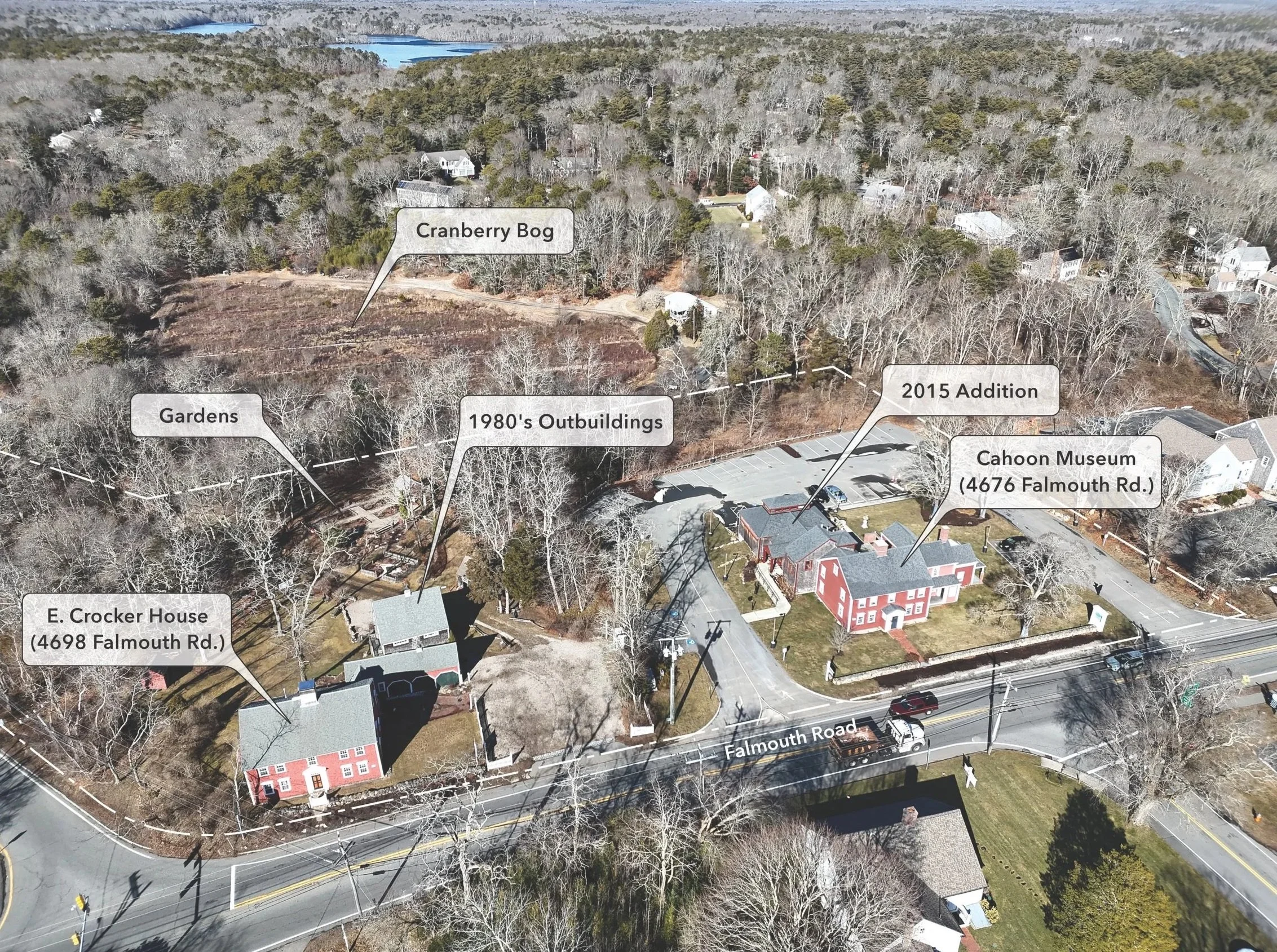
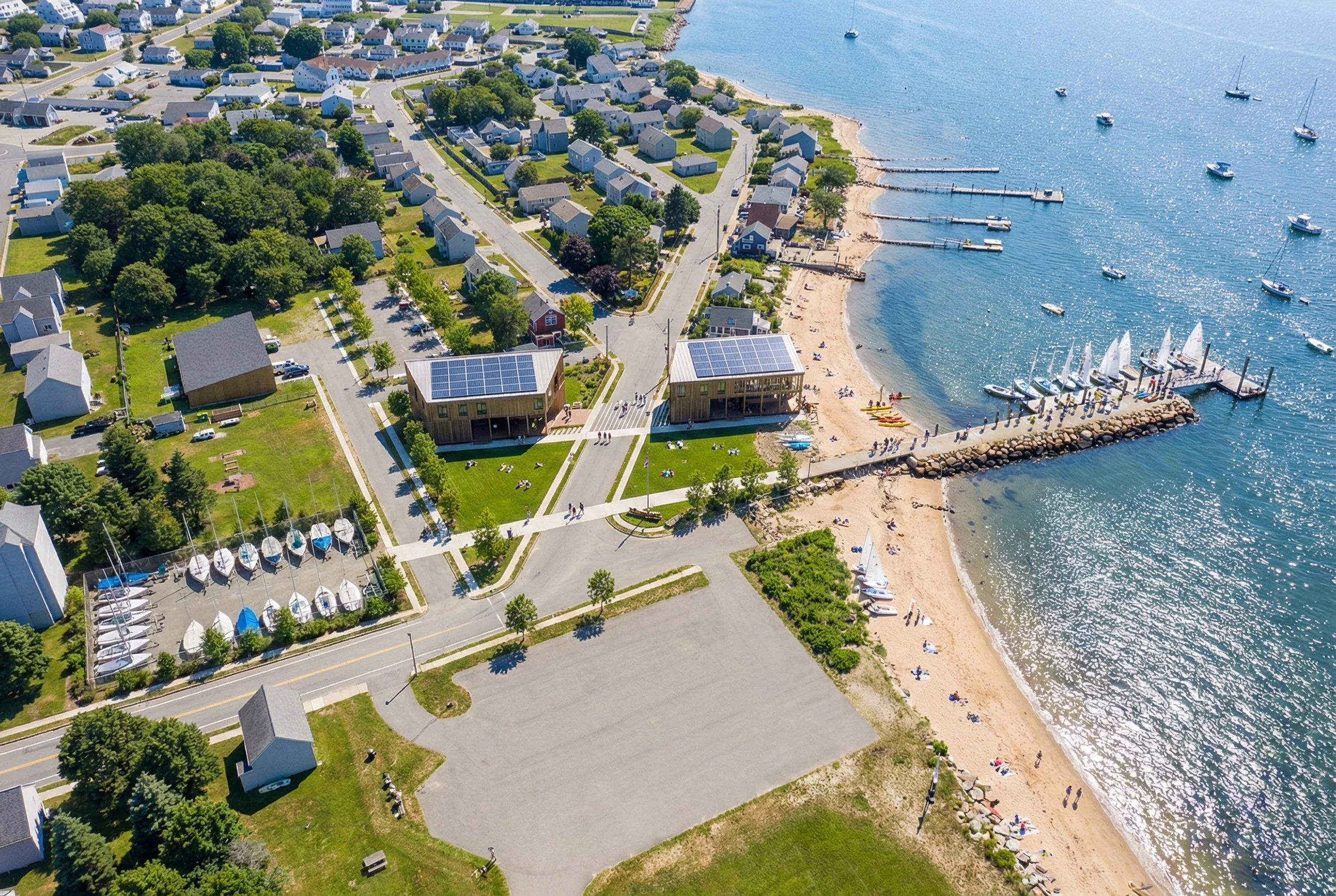
Existing Conditions Aerial
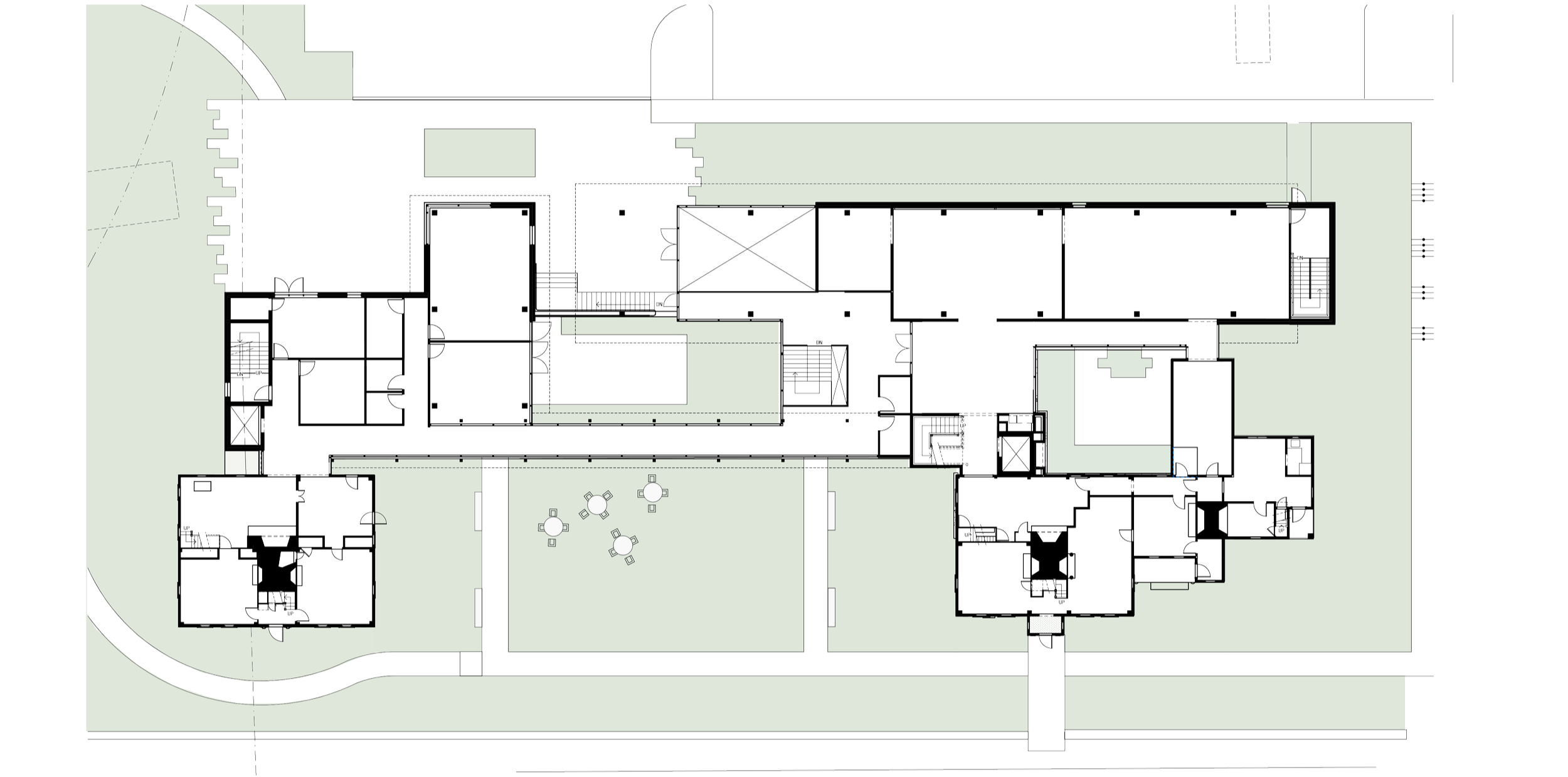
Level 2 Floor Plan