Study Completed 2024
3 acres; 20,000 square feet
New Construction
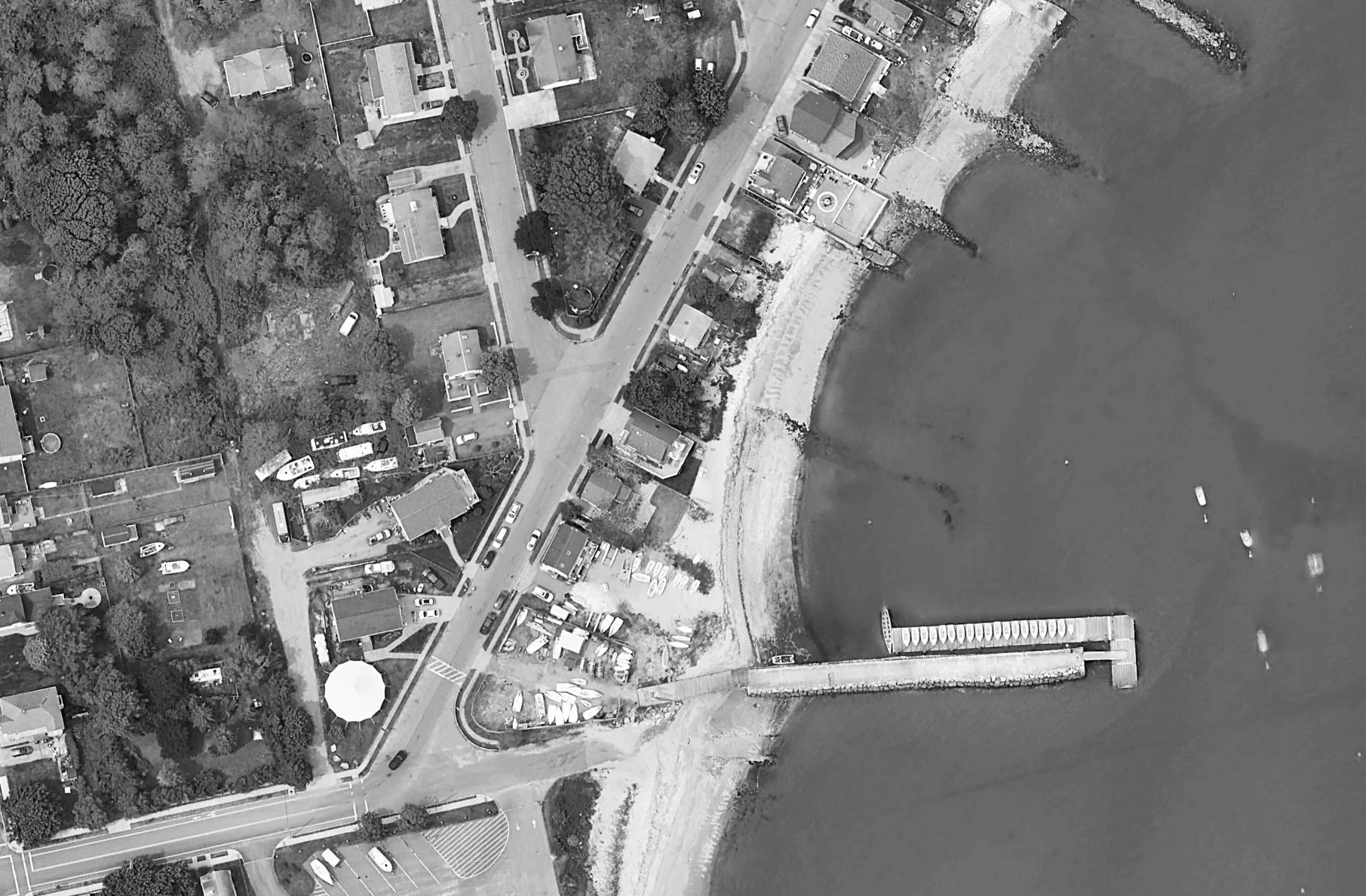
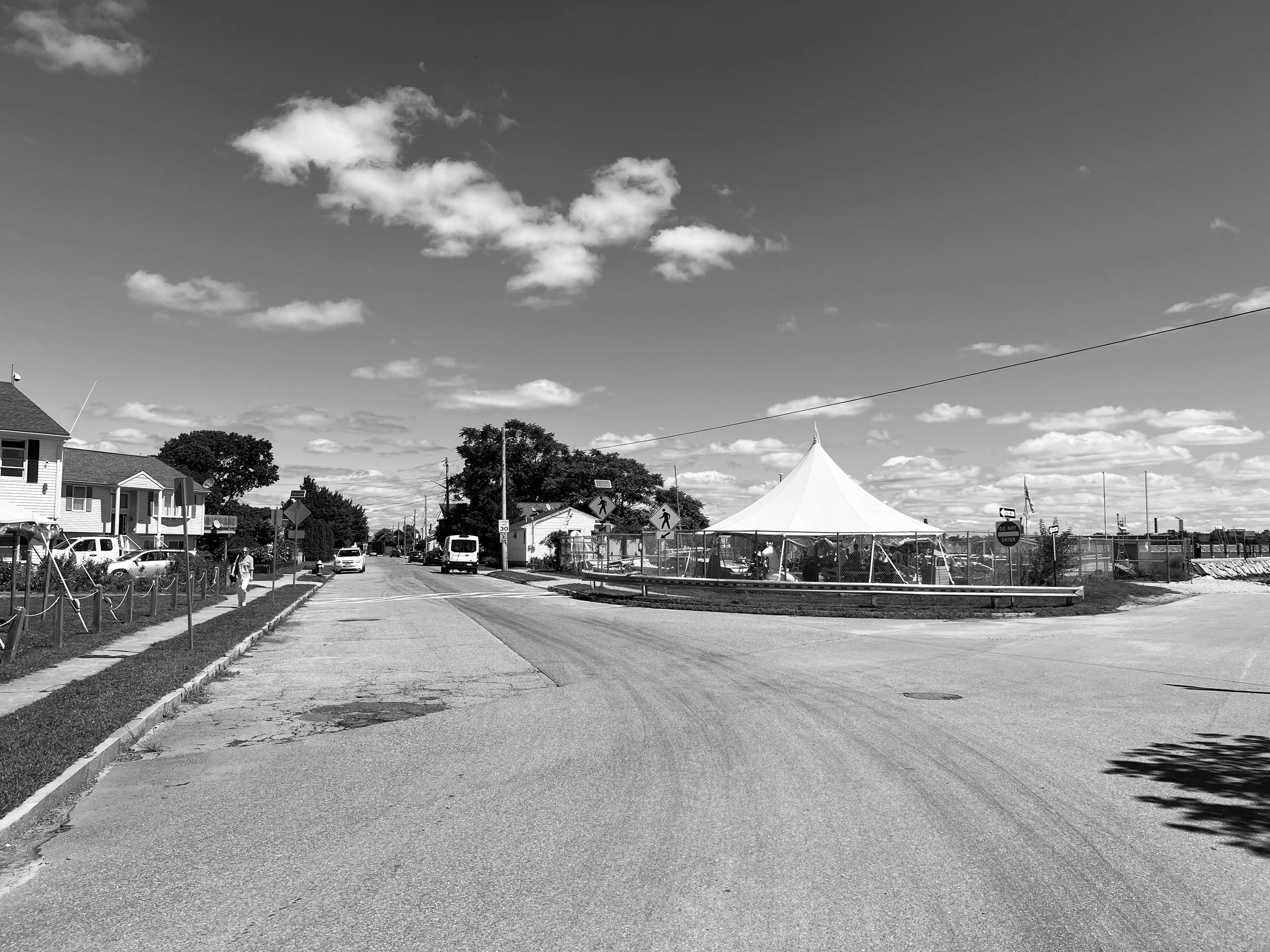
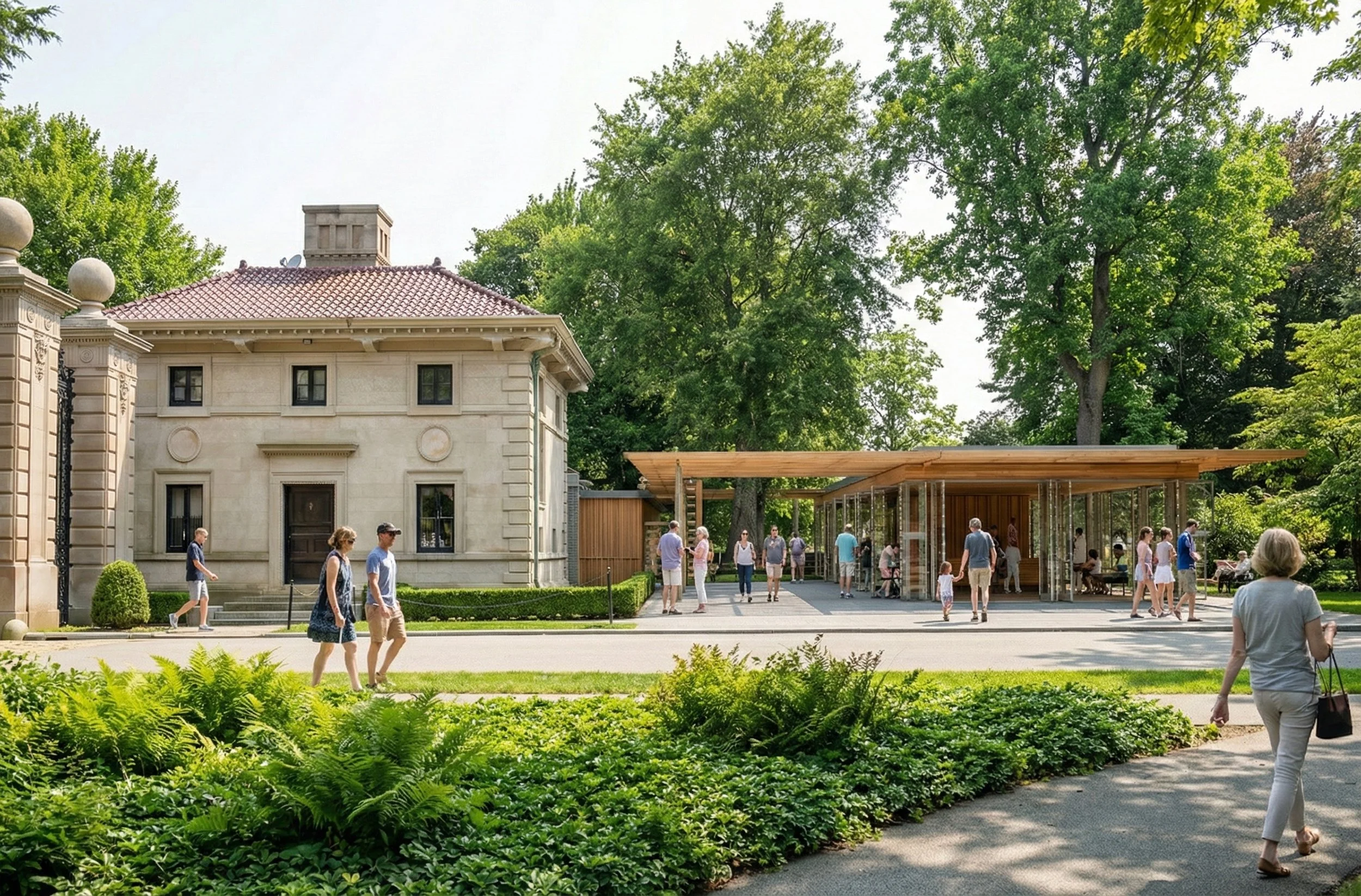
Existing Conditions
Oudens Ello Architecture (OEA) was engaged by the New Bedford–based Community Boating Center (CBC), in partnership with the City of New Bedford, to conduct a comprehensive feasibility study for the enhancement and potential expansion of CBC’s facilities along Clark’s Cove in New Bedford, Massachusetts. As a nonprofit organization dedicated to teaching youth positive life values—such as teamwork, responsibility, and environmental stewardship—through hands-on boating education, CBC sought to evaluate how its physical campus could better support its mission while planning responsibly for long-term growth.
The five-month study examined opportunities to improve and expand the existing site and facilities through a range of strategies, including land acquisition, renovation, rehabilitation, and new construction. The design team assessed the performance of existing buildings and site infrastructure and evaluated potential improvements in relation to programmatic needs, building and life-safety codes, zoning and coastal regulations, and long-term climatic resilience. Cost modeling accompanied each proposed phase of implementation to provide CBC with a clear framework for near- and long-term decision-making.
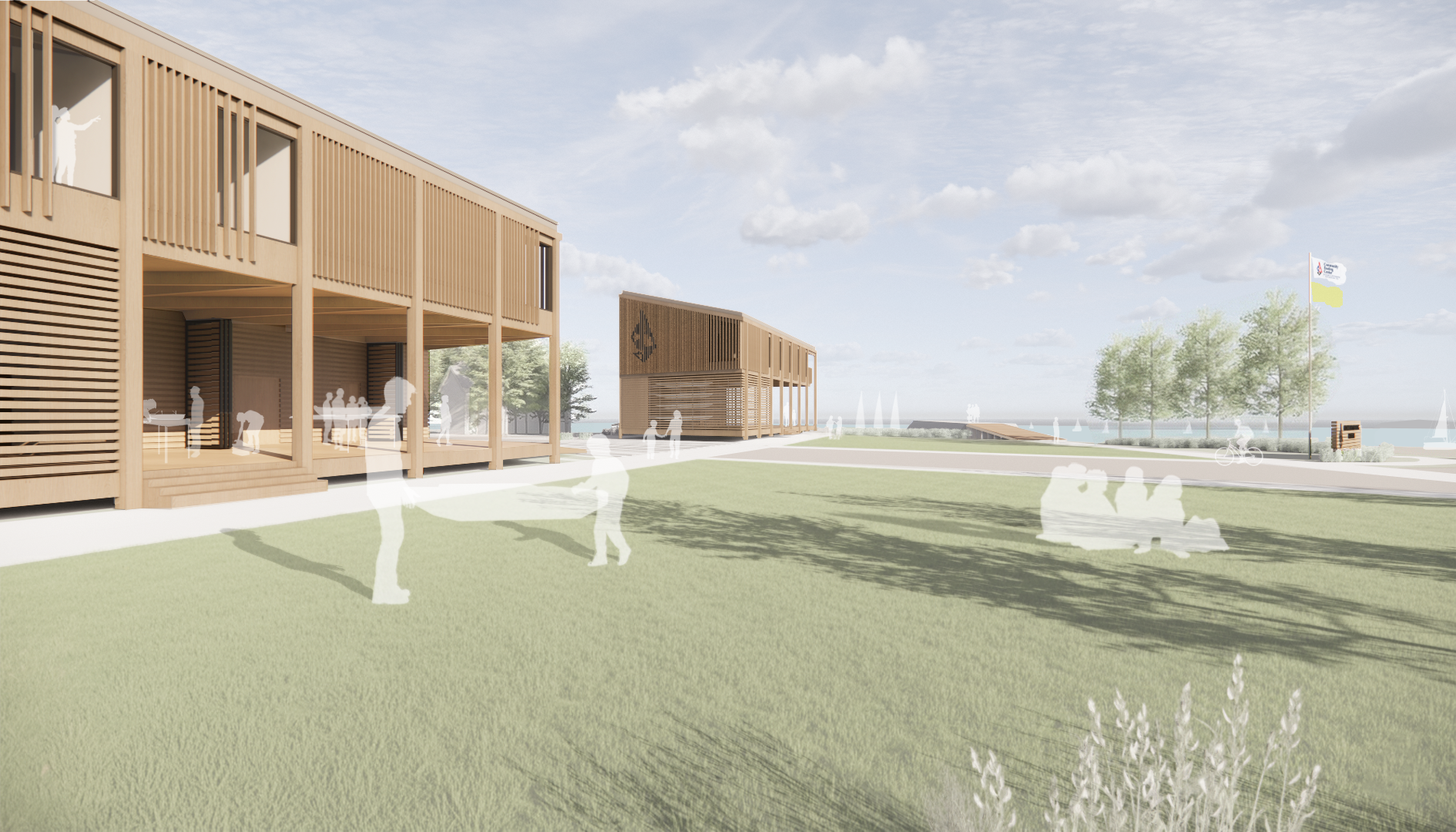
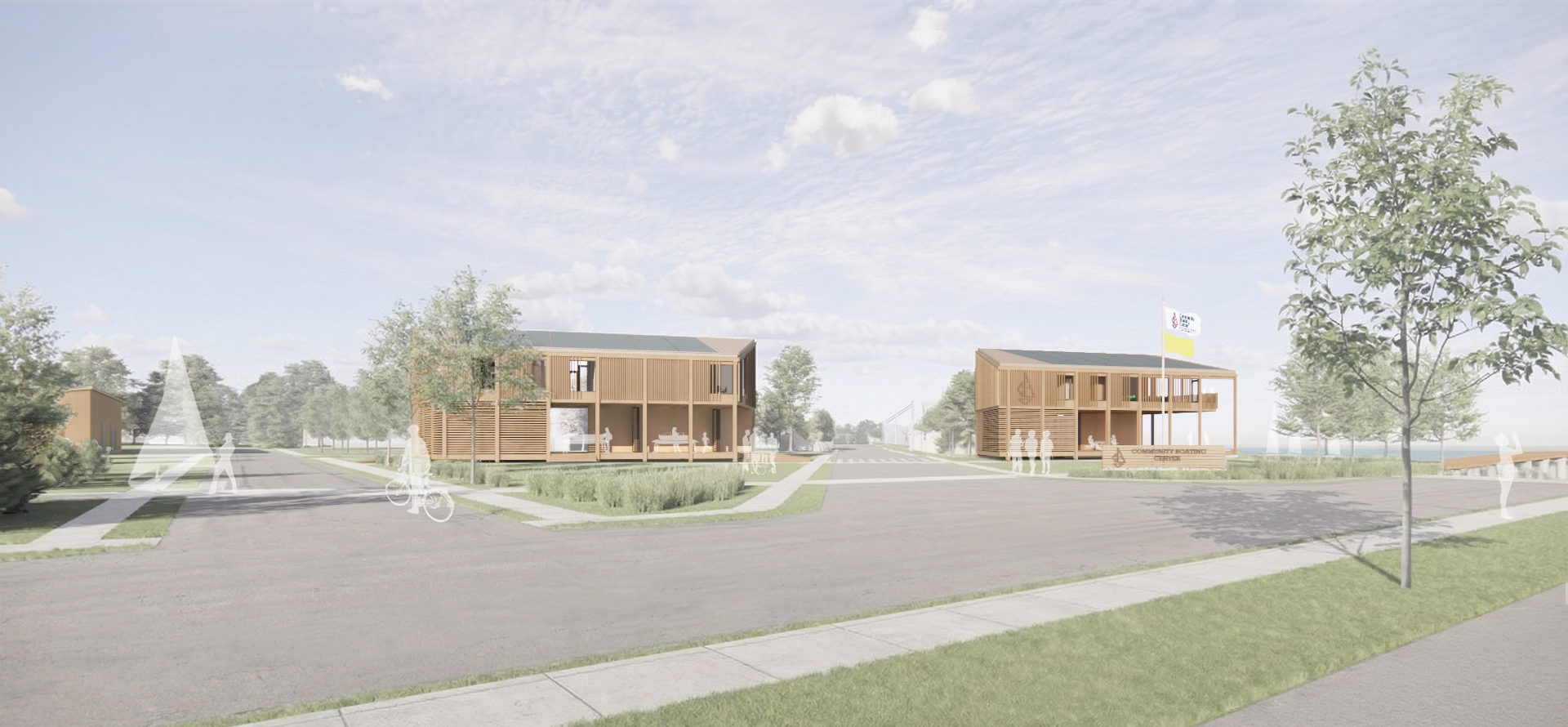
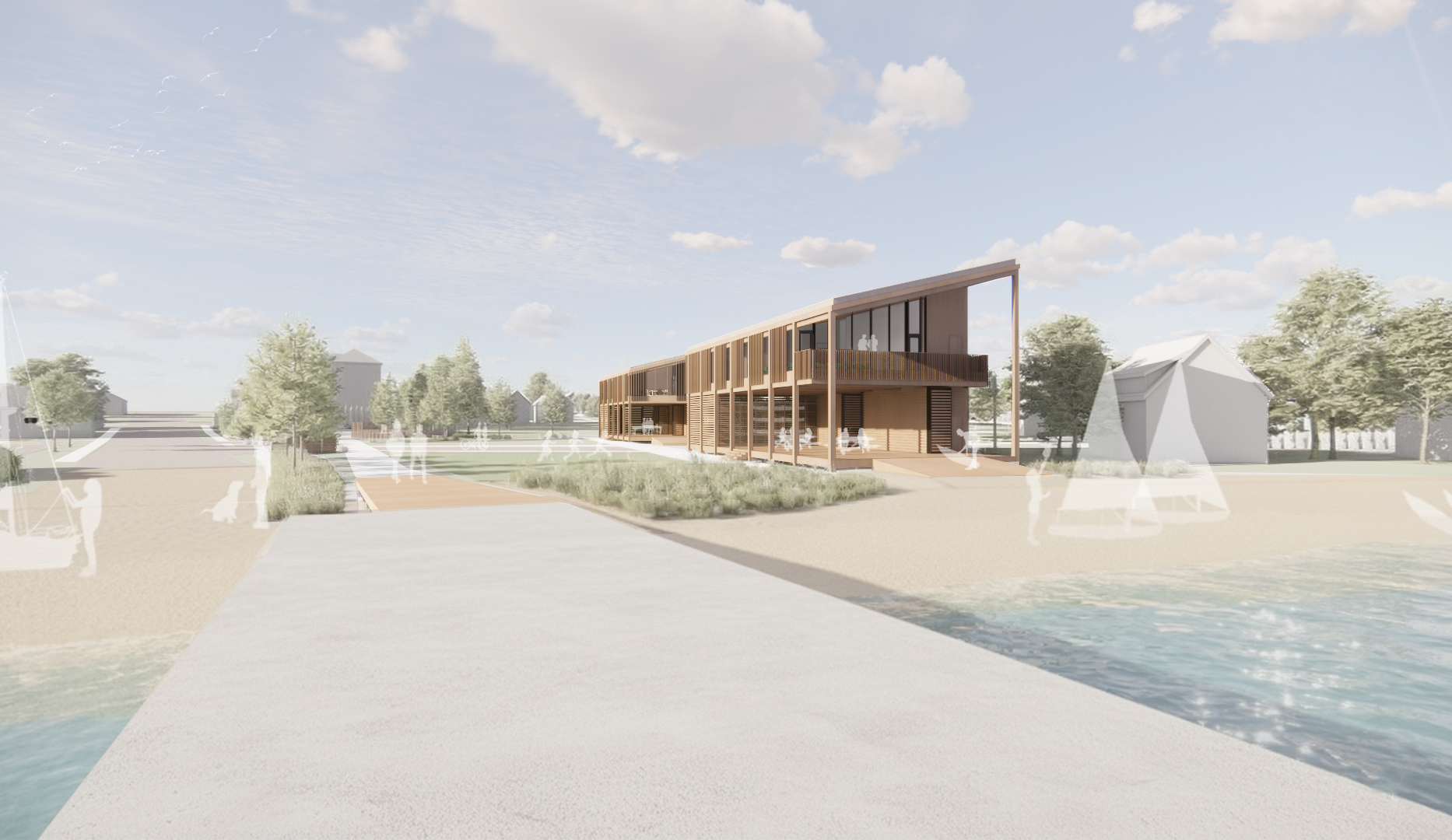
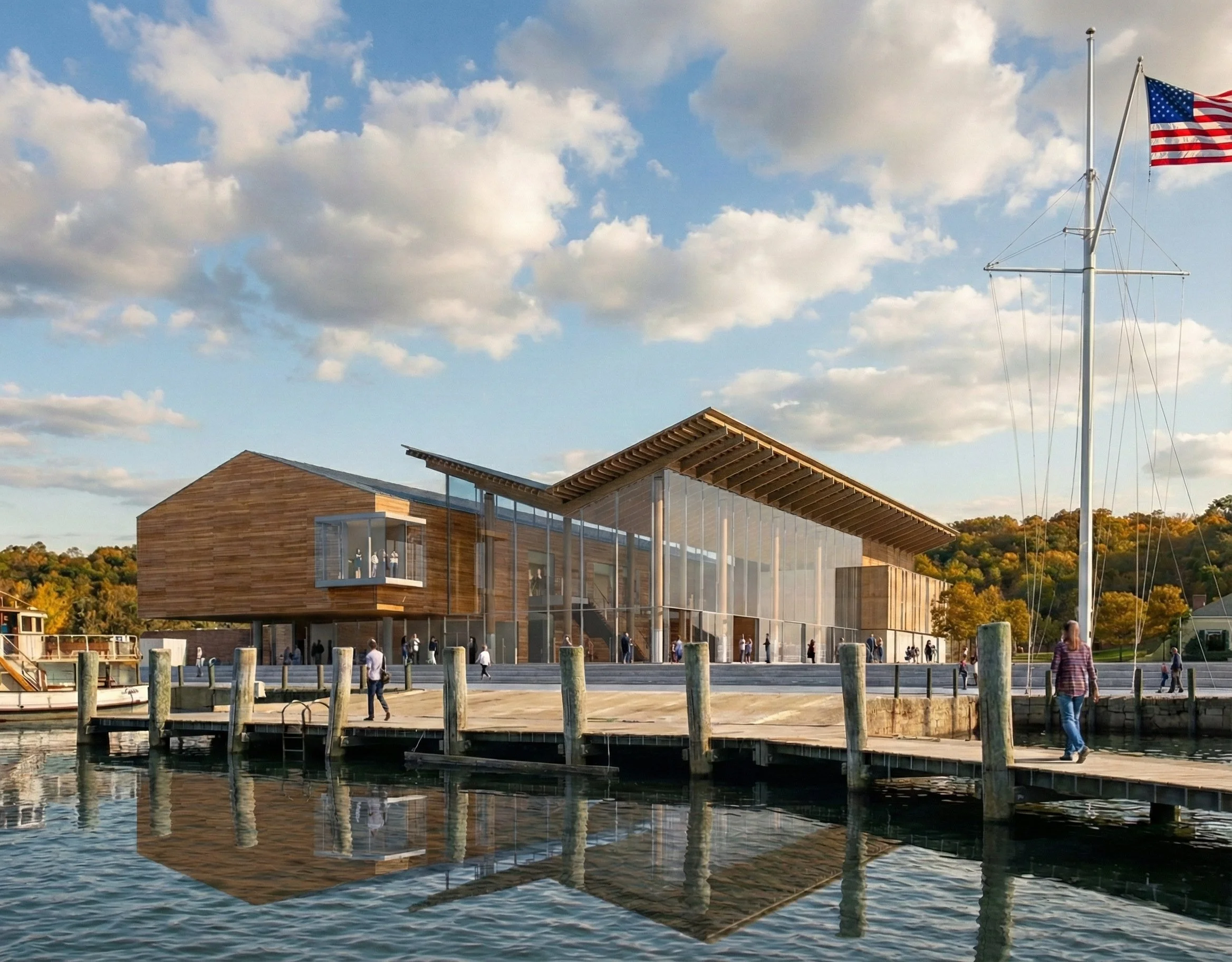
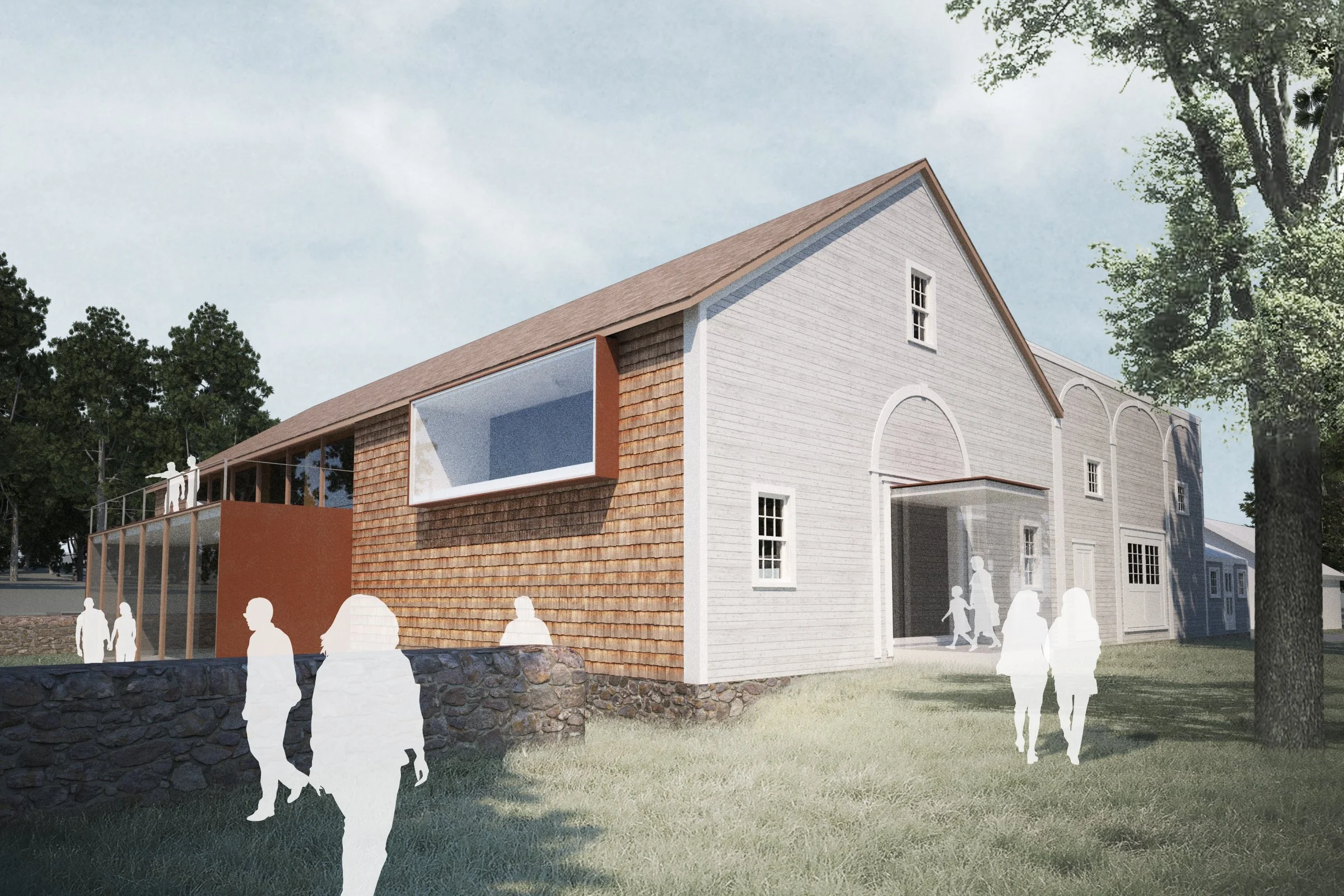
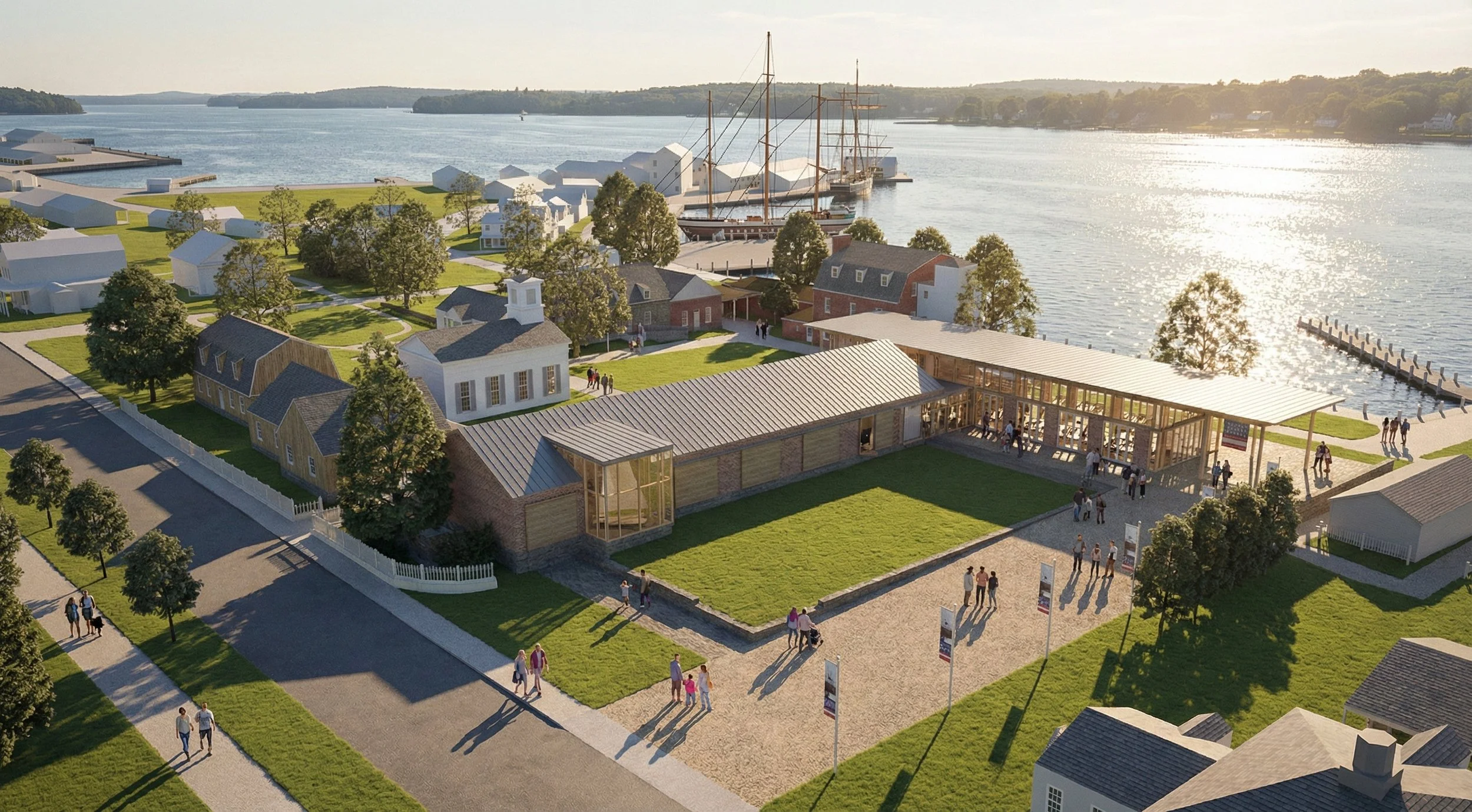
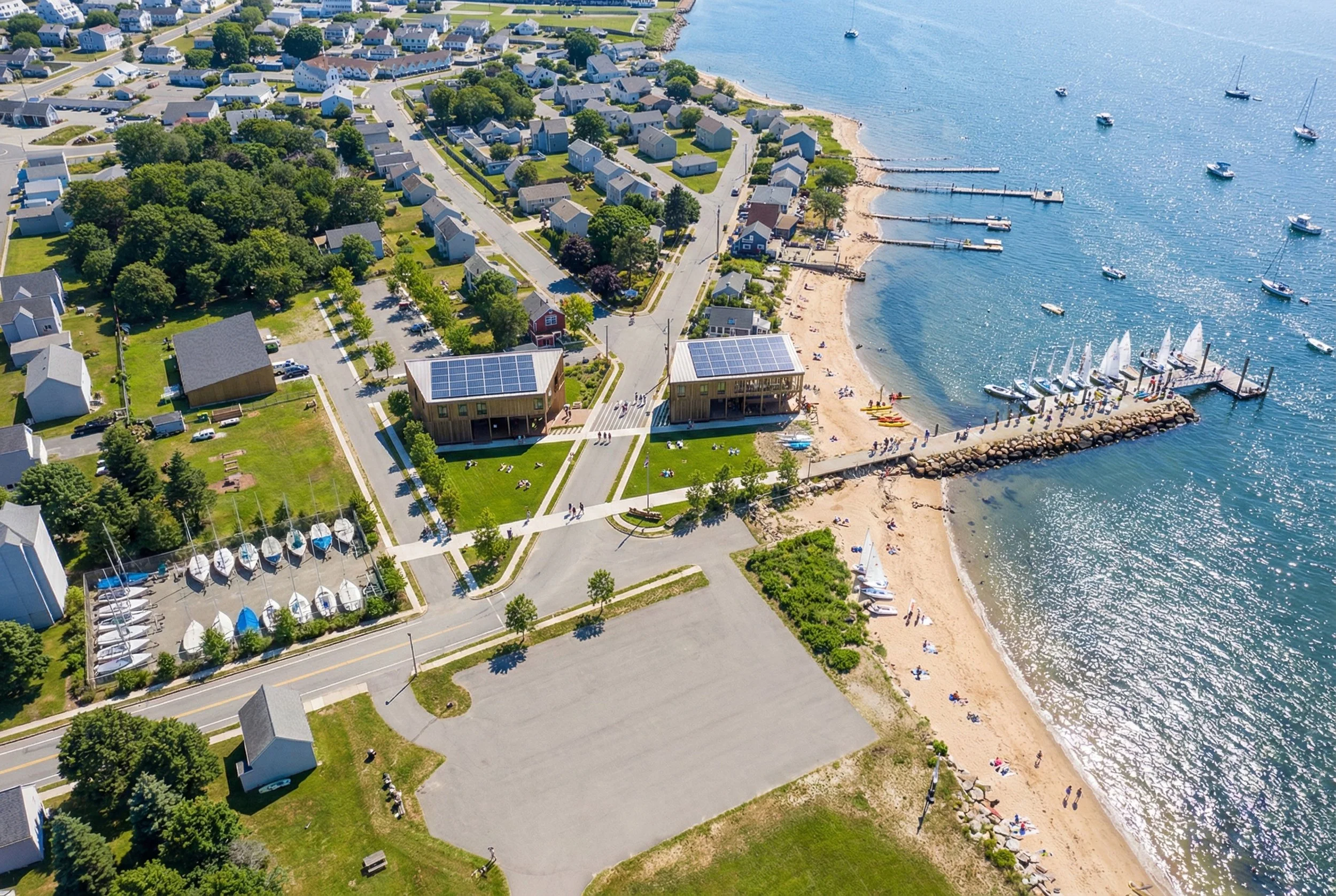
The preferred design envisions a reimagined Community Boating Center as an expanded and reorganized waterfront campus, incorporating both the current site and adjacent parcels in New Bedford and Dartmouth. This enlarged footprint allows CBC’s programs to be consolidated into cohesive, purpose-built facilities that more clearly express the organization’s educational mission and improve day-to-day operations. Proposed improvements include a secure open-air boat storage yard, roadway enhancements, new pedestrian pathways, a realigned boardwalk and pier, beach rehabilitation with native plantings, a dedicated boat repair and storage building, and two new purpose-built buildings accommodating flexible office, instructional, and community event spaces.
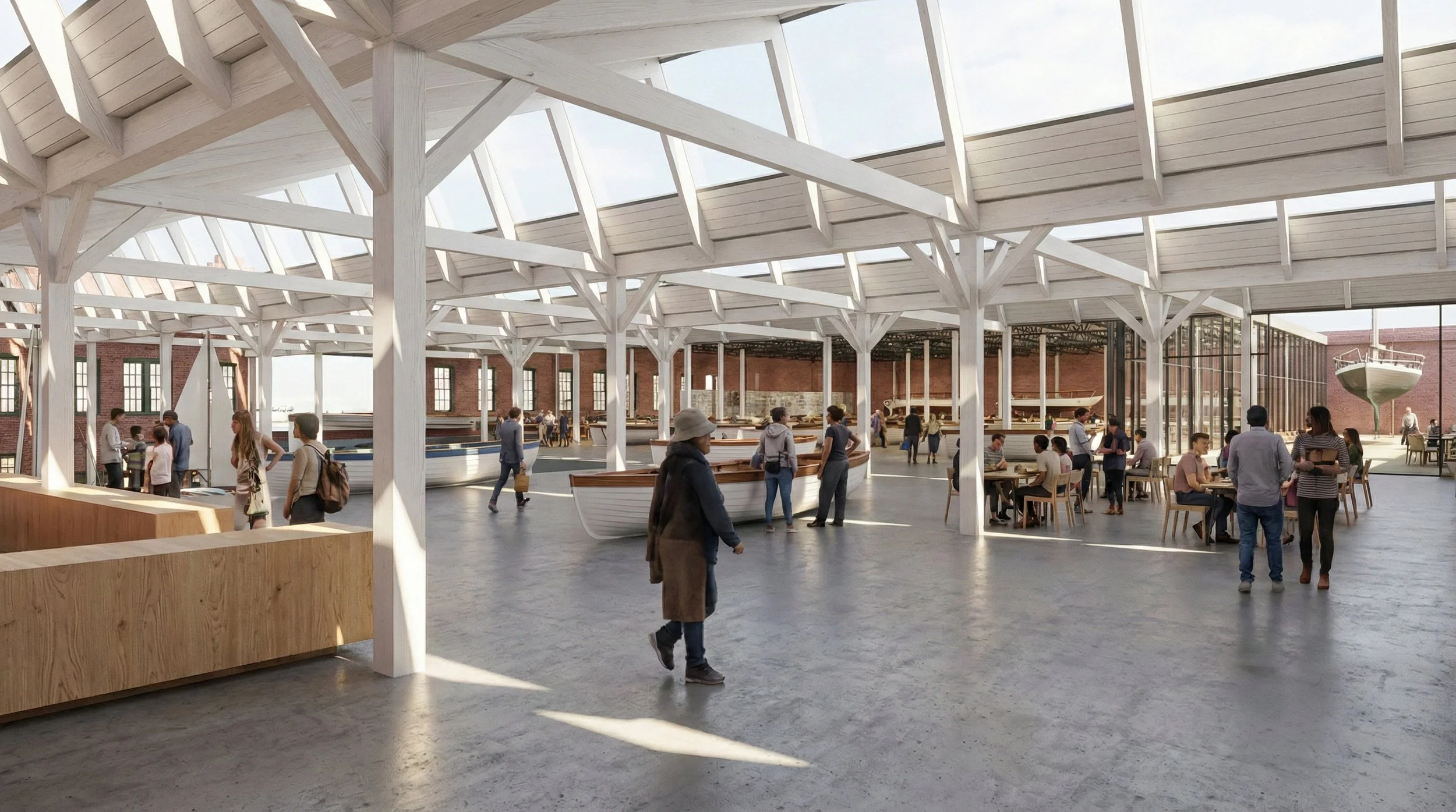
The architectural approach is directly informed by FEMA coastal construction requirements and a commitment to sustainability and resilience. Building systems are located on upper floors, while ground-level spaces are designed to withstand periodic flooding through the use of flood-resistant materials and open, adaptable enclosures. Slatted wood walls—paired with operable panels—allow for natural ventilation, daylight, and flexible degrees of enclosure, supporting a variety of programmatic uses. Heavy timber construction provides a durable, biophilic structural system, while wood cladding, selected for its carbon-neutral properties and ease of replacement, will weather naturally over time, echoing the character of traditional maritime structures throughout coastal New England.
South-facing roofs on the two primary buildings are designed to support photovoltaic arrays, further reinforcing CBC’s commitment to environmental stewardship. Together, the campus planning, architectural strategies, and material choices align with CBC’s dual mission of youth education and sustainability, allowing the buildings and landscape to serve not only as functional infrastructure, but also as active teaching tools that model resilience, resource awareness, and respect for the waterfront environment.
Phase 1
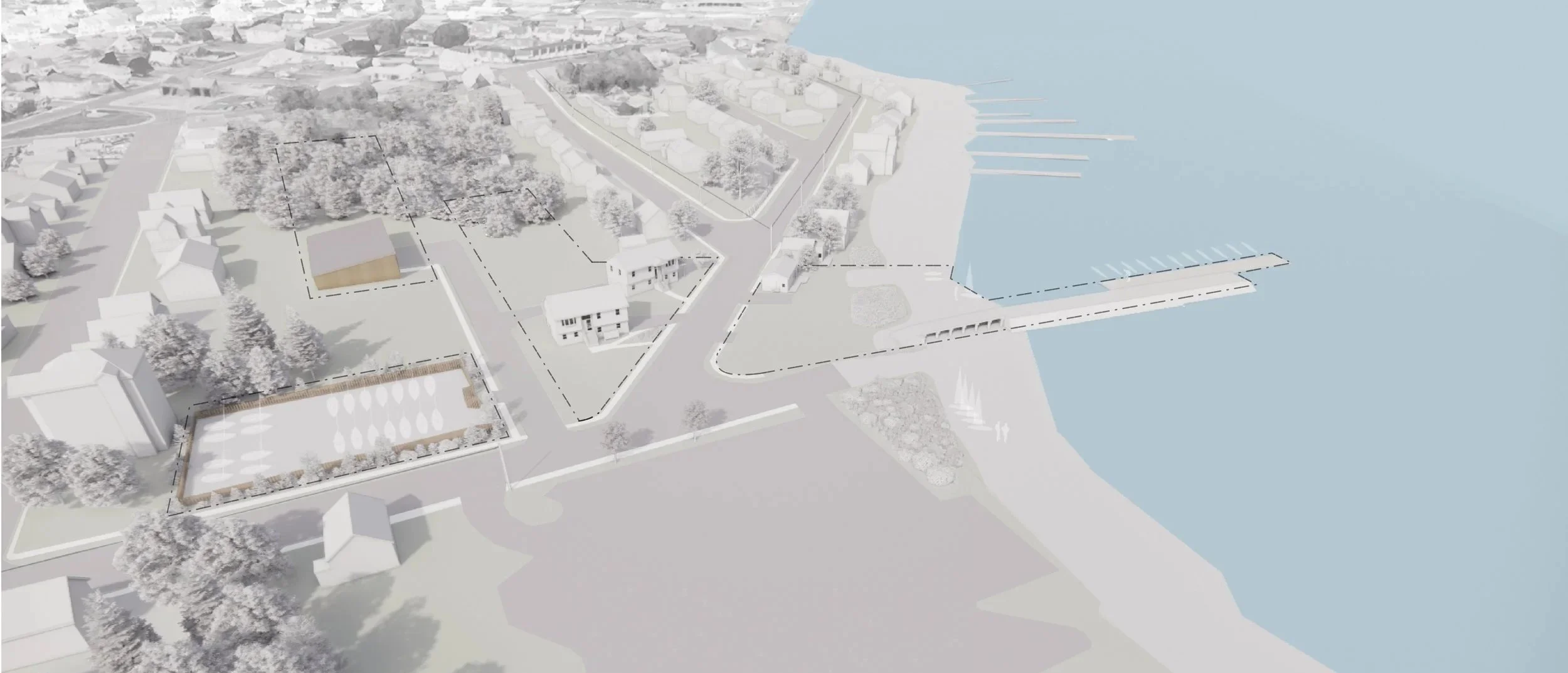
Phase 2
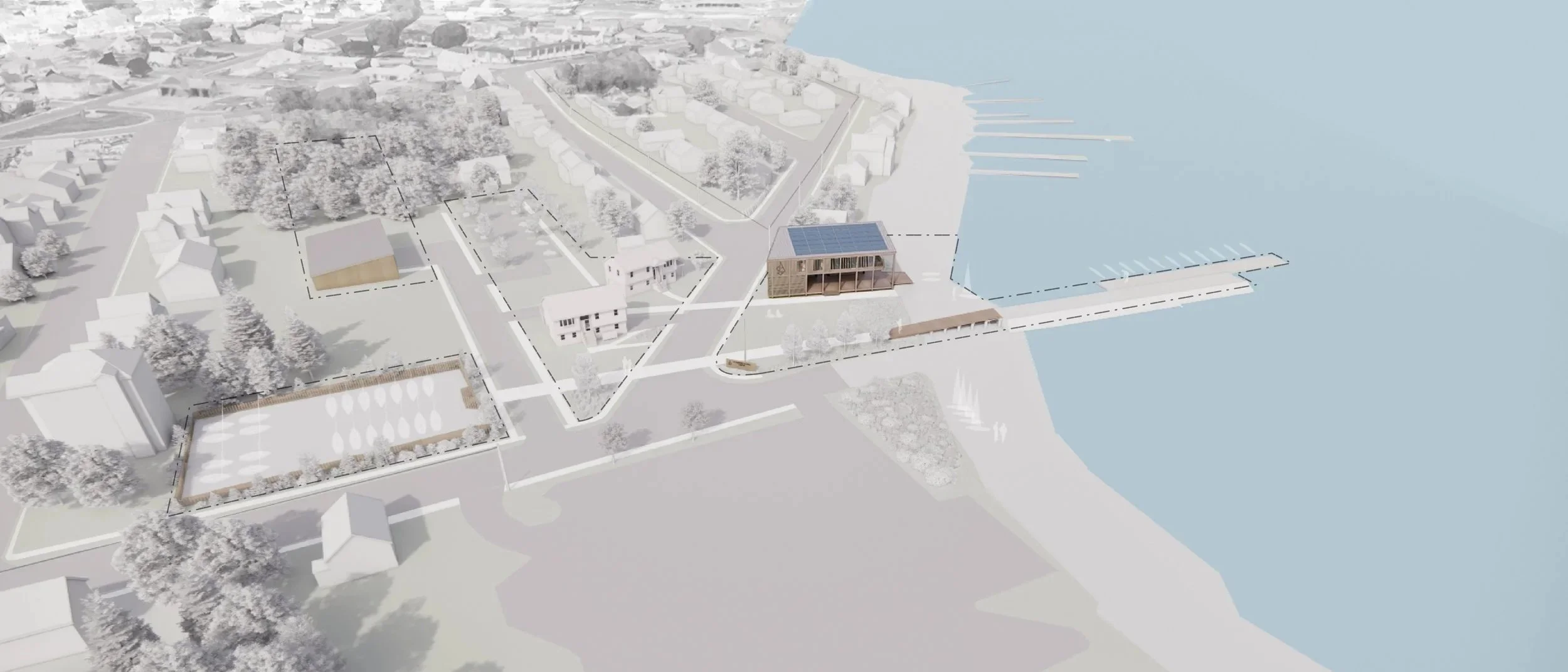
Phase 3