
Family Justice Center
Boston, MA
cIvic
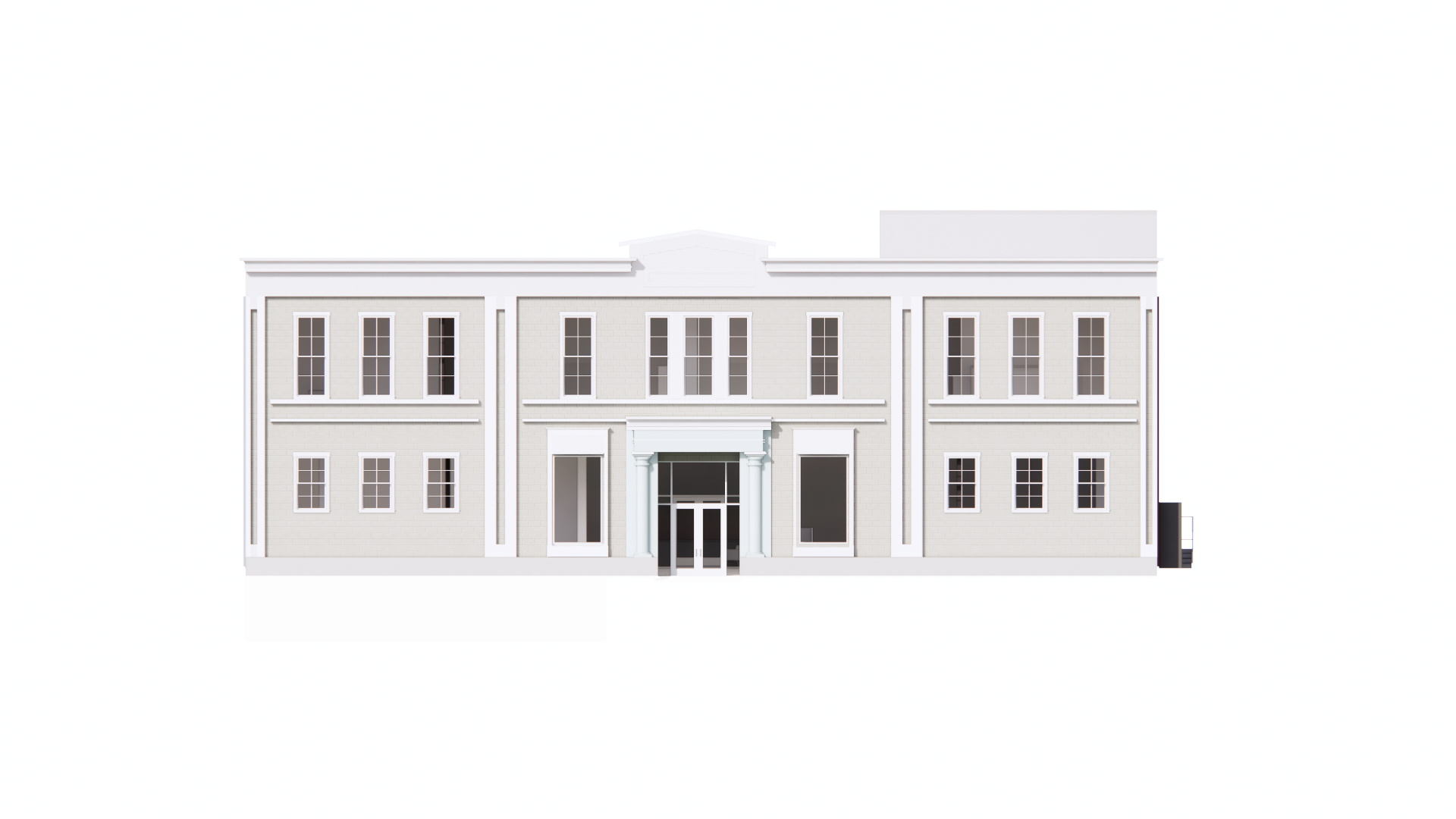
Study Completed in 2025
35,000 square feet
Renovation
Oudens Ello Architecture (OEA) was hired by the City of Boston's Property Management Department to conduct a programming study of the Dee Kennedy Family Justice Center (FJC) building at 989 Commonwealth Ave, Boston, MA. This programming study is aimed at assessing and cataloging current uses within the Family Justice Center and defining future program and space planning needs that optimize the functionality of the Center for the various user groups that it houses.
During the four-month study, the Design Team met with representatives from each of the user groups, building operations and management, as well as interested parties from the Boston Public Health Commission and the City of Boston to discuss the current and future needs of facility. This was accompanied by a non-invasive visual inspection of the building by the architectural team and a code review by members of the life safety consultant team. Finally, the Design Team developed several space planning concepts that are representative of several different possible future use scenarios.
Option 1:
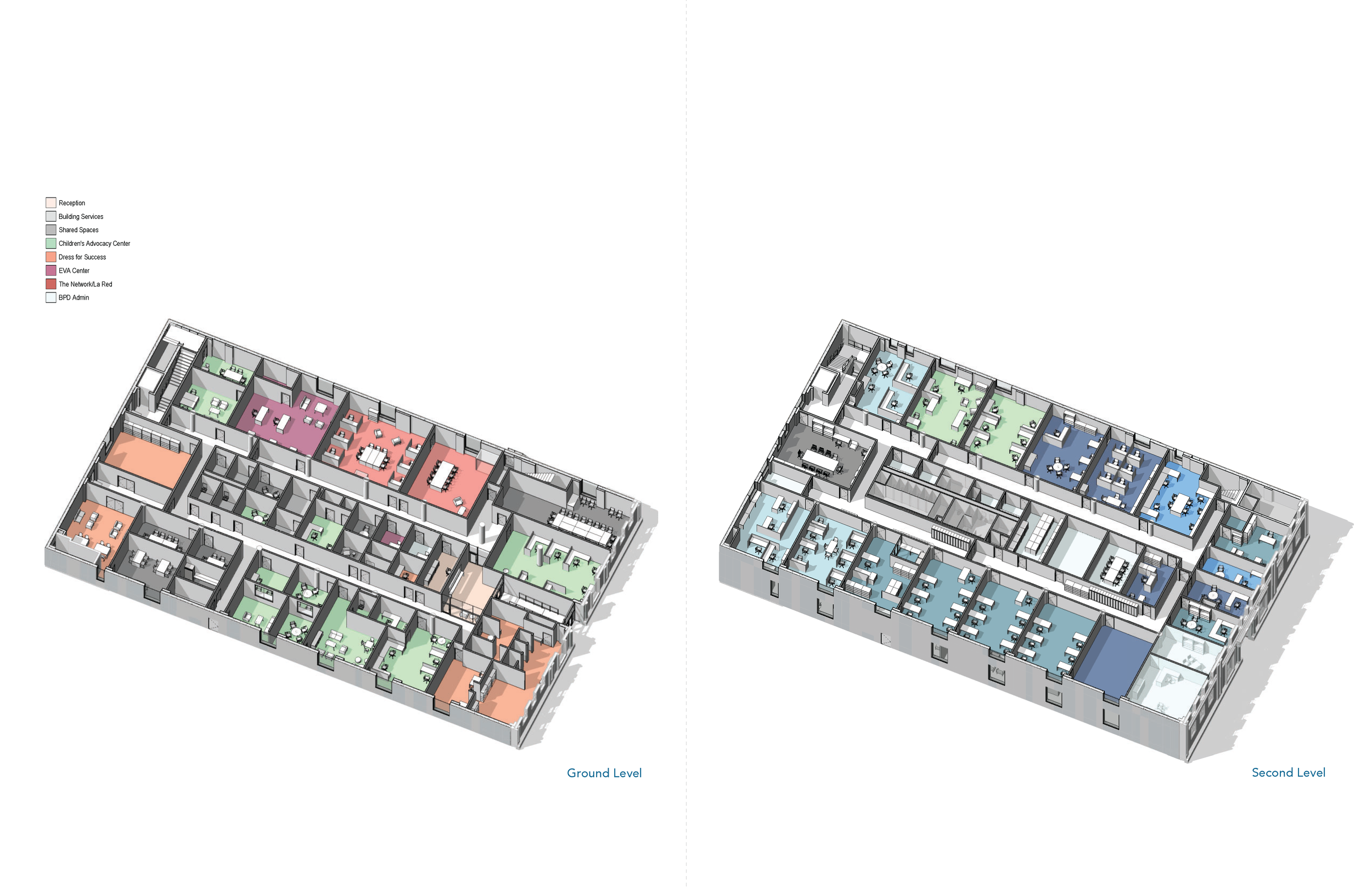
Three-dimensional diagrams showing minor alterations to the existing building. Note the solidity of the walls with no interior glazing and all solid doors. The corridors are long, featureless and uninterrupted. In this option, the architectural changes have functional not qualitative impact.
Option 2:
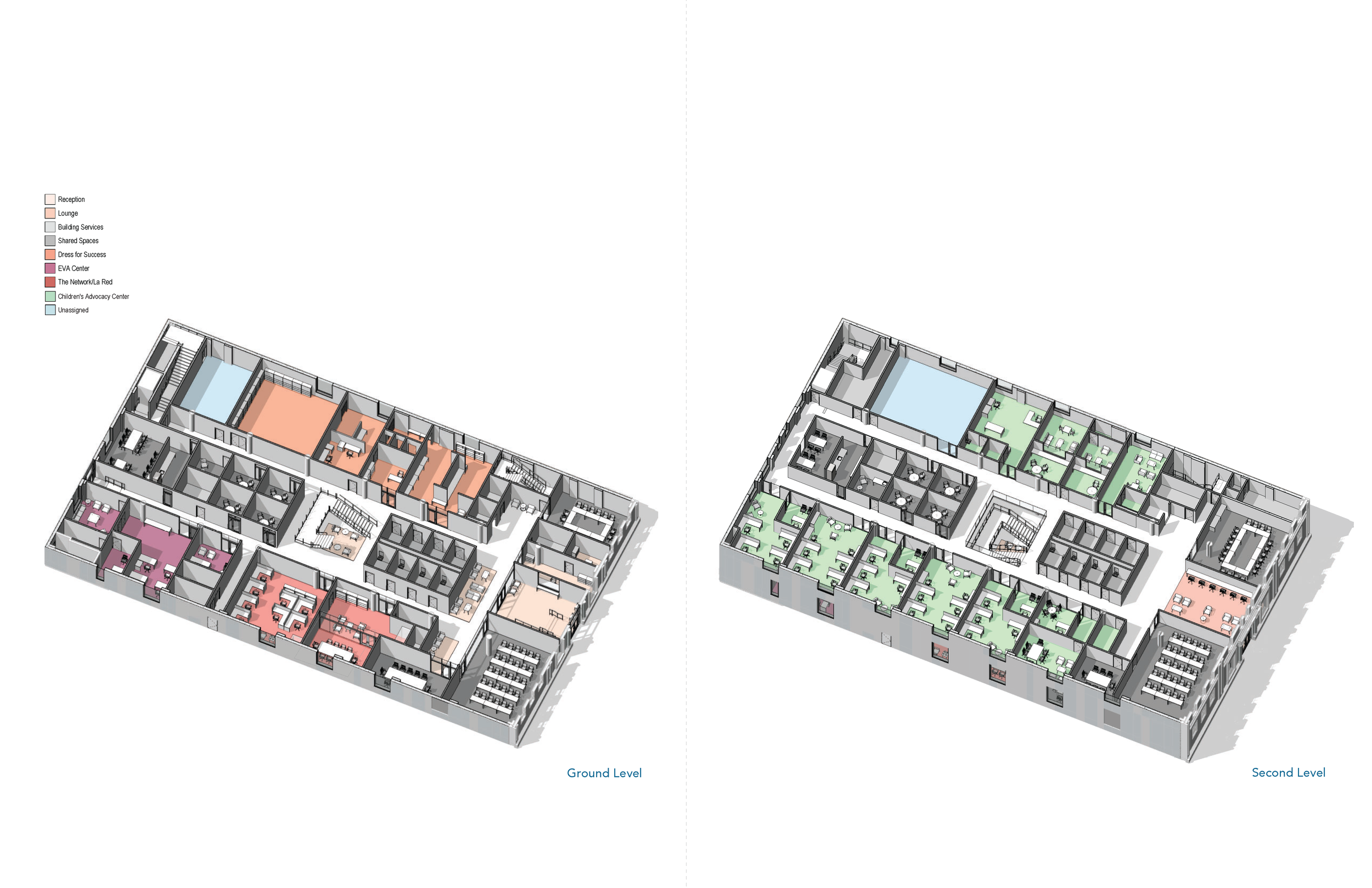
Three-dimensional diagrams showing more extensive architectural changes. Generous circulation and soft seating areas on the southern end plus the architectural stair opens the plan up spatially. New glazed entries break up the solidity of the corridors and provide natural light. Acoustical ceilings and walls treatments will be incorporated.
Option 3:
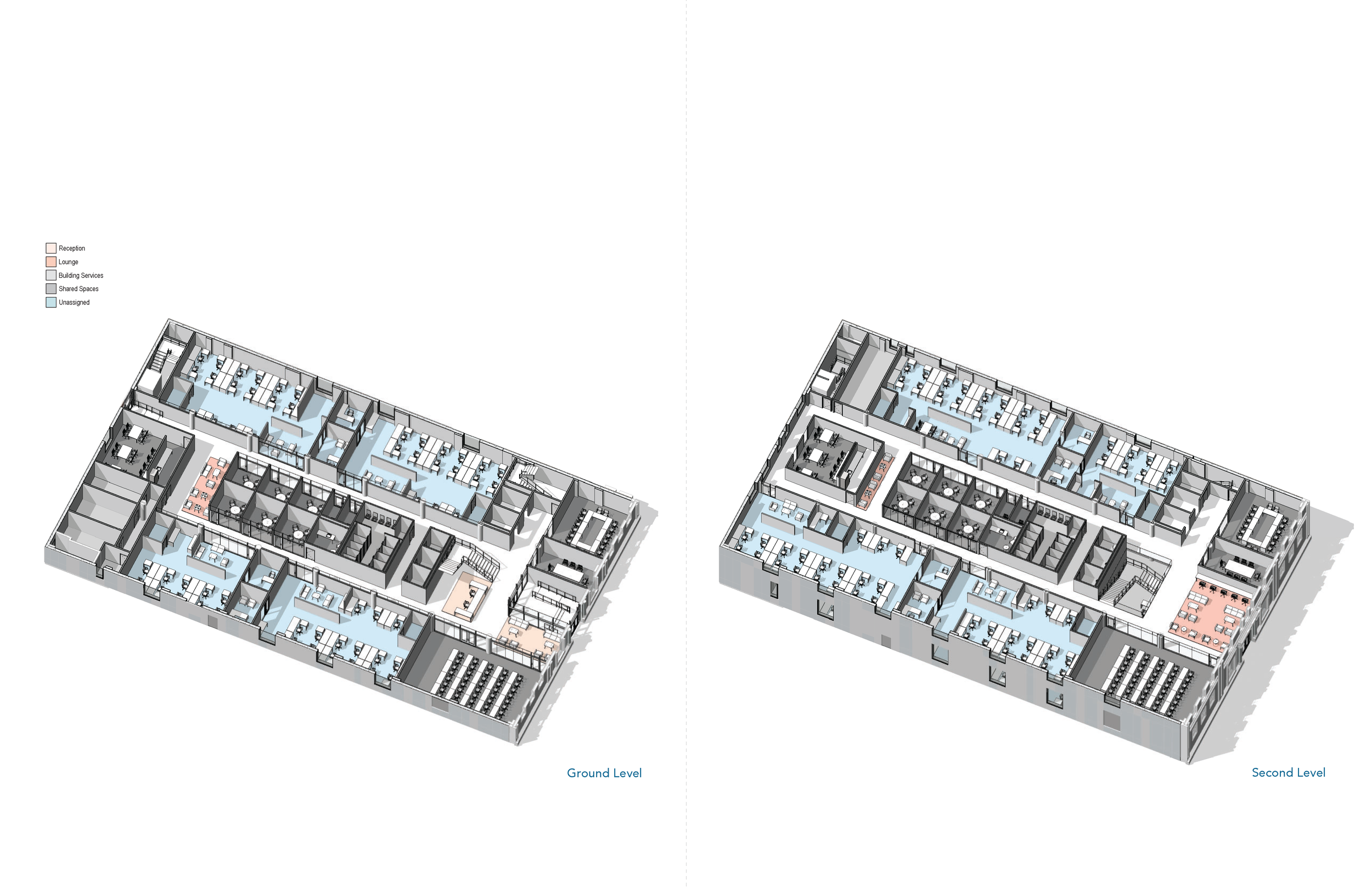
Three-dimensional diagrams showing a standardized floorplan for theoretical occupants. Full height glazing at entries and meeting spaces and clerestory windows along the corridor significantly alter the proportion of solid wall, making the building brighter, more open and inviting. The entry sequence has been transformed.
Option 4:
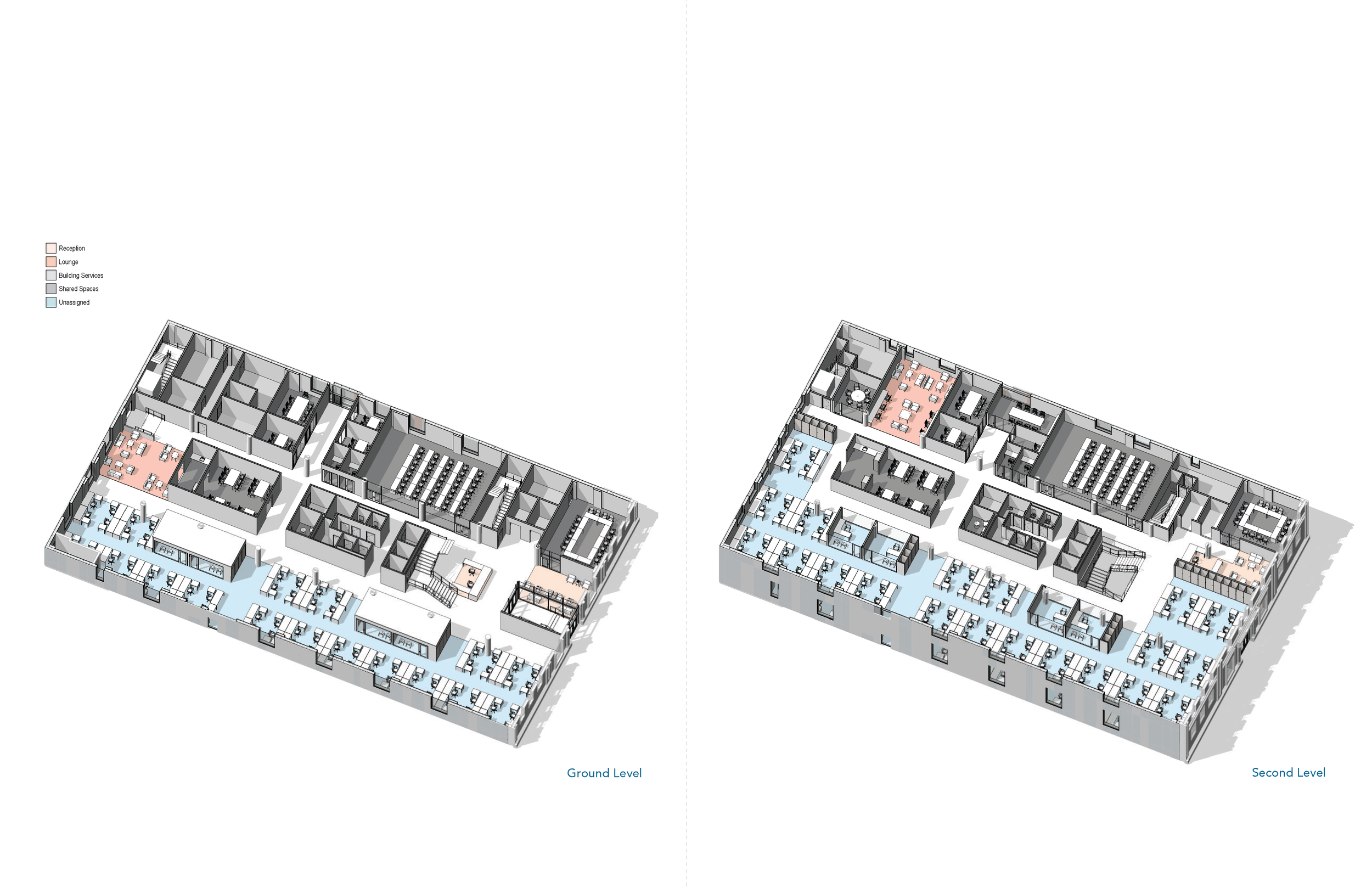
Three-dimensional diagrams showing an open office environment with sightlines and circulation in both directions. The more solid bank of program is on the east side of the building, prioritizing natural light and views in the long direction and creating distinct working and shared use zones.